The AI Dungeon Master That Finally Remembers You
I have reviewed a lot of "AI Dungeon Master" apps, and I have quit almost all of them for the same reason. Around session three, the machine forgets. The dagger you found in the crypt evaporates from your inventory. The innkeeper who swore a blood oath against you greets you like a stranger. The wound that should have you at half health is gone, because the wound only ever existed as a sentence the model wrote and then scrolled out of its own memory. The illusion of a living world lasts exactly as long as the conversation window, and then it starts to rot.
Chronicle does not do this, and understanding why it doesn't is the whole story.
Memory you can point at
Most AI storytellers keep the state of your game inside the conversation itself — a long, ever-growing transcript the model re-reads every turn. It works beautifully for twenty minutes and degrades from there, because a chat log is a lossy, contradictory place to store facts. Chronicle's builder threw that model out. Your campaign lives on disk as a set of plain files: a character sheet, a world state, an NPC roster, a quest log, a running session record. The AI reads those files before it narrates and rewrites them the instant anything changes. If you spend four silver at the market, four silver leaves the sheet — tracked, believe it or not, across all five coin denominations — and the number the game shows you is read back off the file, not guessed from memory.
The effect on play is hard to overstate. I ran a character across what would have been several "sessions" in any other app, and Chronicle simply held. An NPC I'd insulted in my first hour was still frosty hours later. A subplot I'd half-forgotten resurfaced because it was sitting in the quest log the whole time, waiting. This is the thing every one of these products promises and this is the first one that delivered it. The continuity isn't a trick of a longer memory window; it's an architecture that treats the files as the truth and the AI's own recollection as merely a draft to be corrected.
It actually knows the rules
The second quiet miracle is that Chronicle plays 5th Edition, not a vague improvisational cousin of it. When a moment calls for an attack roll, a saving throw, advantage, a condition like restrained or prone, a spell slot, a short rest — the storyteller consults grounded rules text rather than free-associating from whatever it half-remembers about D&D. Dice are rolled by the app, not narrated into existence, so you can trust that the natural 20 was real and the game isn't quietly fudging outcomes to move the plot. For anyone who has watched an AI cheerfully invent a spell that doesn't exist, this is a genuine relief.
Crucially, none of that machinery is visible. The rules discipline runs underneath prose that never breaks character to talk about files, tools, or "updating the state." You get the story; the bookkeeping stays backstage where it belongs.
A world that draws itself — privately
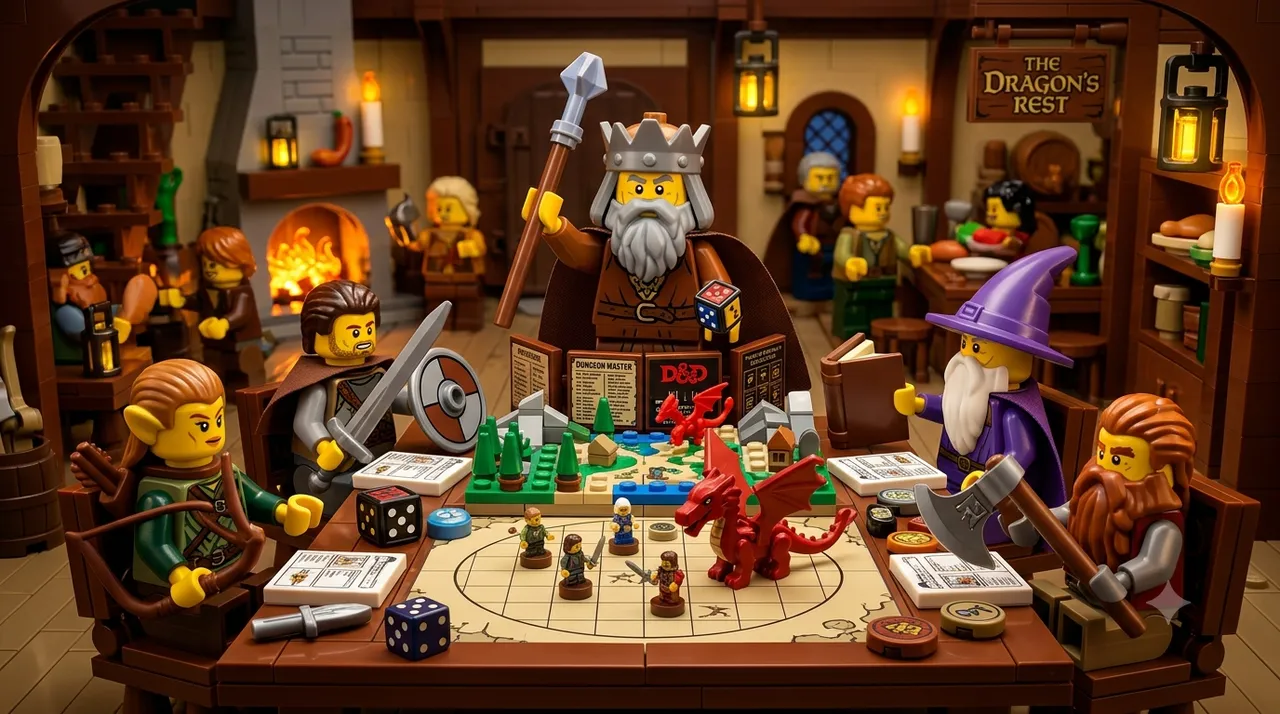
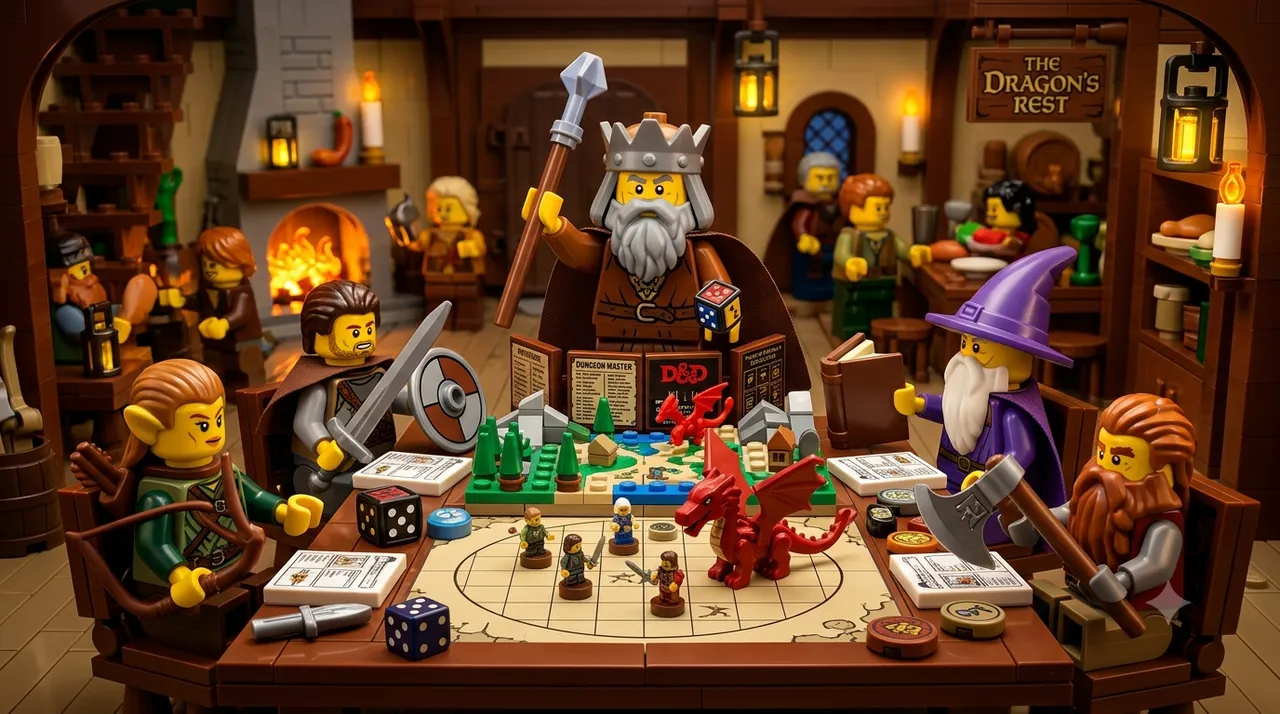
Chronicle can illustrate your campaign, and here the design choices are pointed. Rather than piping your story out to some image API, it can generate art on a graphics card in your own home, styled to match the campaign — a genuine range of looks, from oil painting to hard-edged pixel art to a toy-brick vibe, held consistent so the whole thing reads as one illustrated world. New NPCs and locations get portraits; a given moment can be captured from the exact scene the storyteller just described. And because named characters are drawn from their established appearance on file, the woman you built as a towering Goliath stays a towering Goliath instead of being quietly redrawn as a man three scenes later — a small thing that, again, every other app I've tried gets wrong.
Which brings me to the part that will matter most to a lot of people: nothing leaves your home network. Chronicle runs on your own computer and you play from your phone or tablet on the same Wi-Fi. Your character, your choices, your strange and personal story — none of it is training data, none of it is a product, none of it is anyone's business but yours. In 2026 that is not a footnote. It's a feature you can feel in your shoulders relaxing.
The catch, and it's a small one
Chronicle is not a slick app-store download. It's a self-hosted project, and getting it running takes twenty or thirty minutes and a willingness to follow a setup guide once. You'll want a Claude subscription to power the storyteller and, for the fancy local art, a capable GPU. This is clearly one determined builder's craft rather than a venture-funded product, and it shows in the best way: the priorities are continuity, privacy, and the feel of the thing, not monetization hooks.
The verdict
I came in as a skeptic with a graveyard of abandoned AI-DM apps behind me. I'm leaving convinced I've finally seen it done right. Chronicle isn't trying to be a flashier chatbot; it's a small, opinionated piece of engineering built around a single correct idea — that a game world should have a memory you can point at — and everything good about it flows from that. It feels less like software and more like opening a leather-bound journal that happens to be alive.
It is the best computer version of D&D I have played, and it runs on a machine in someone's spare room. That tells you where the interesting work is happening now.
Check out Chronicle today!