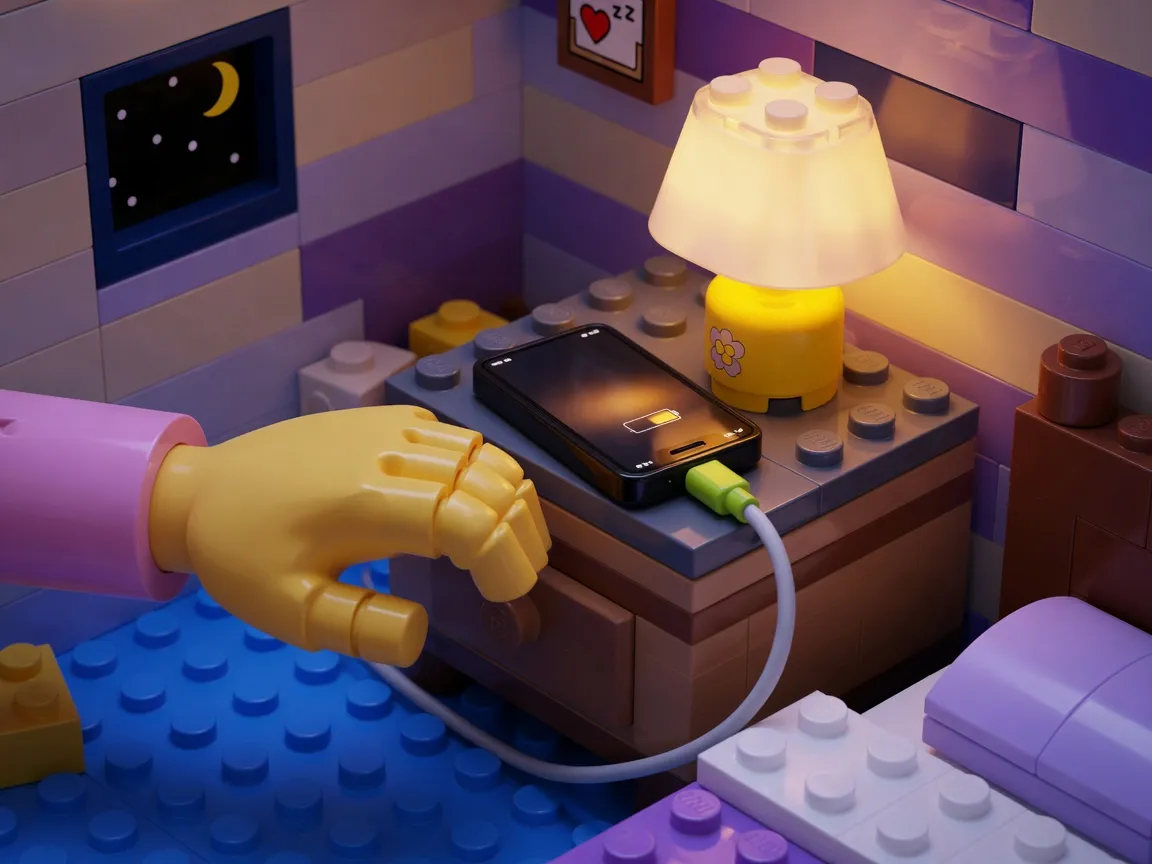
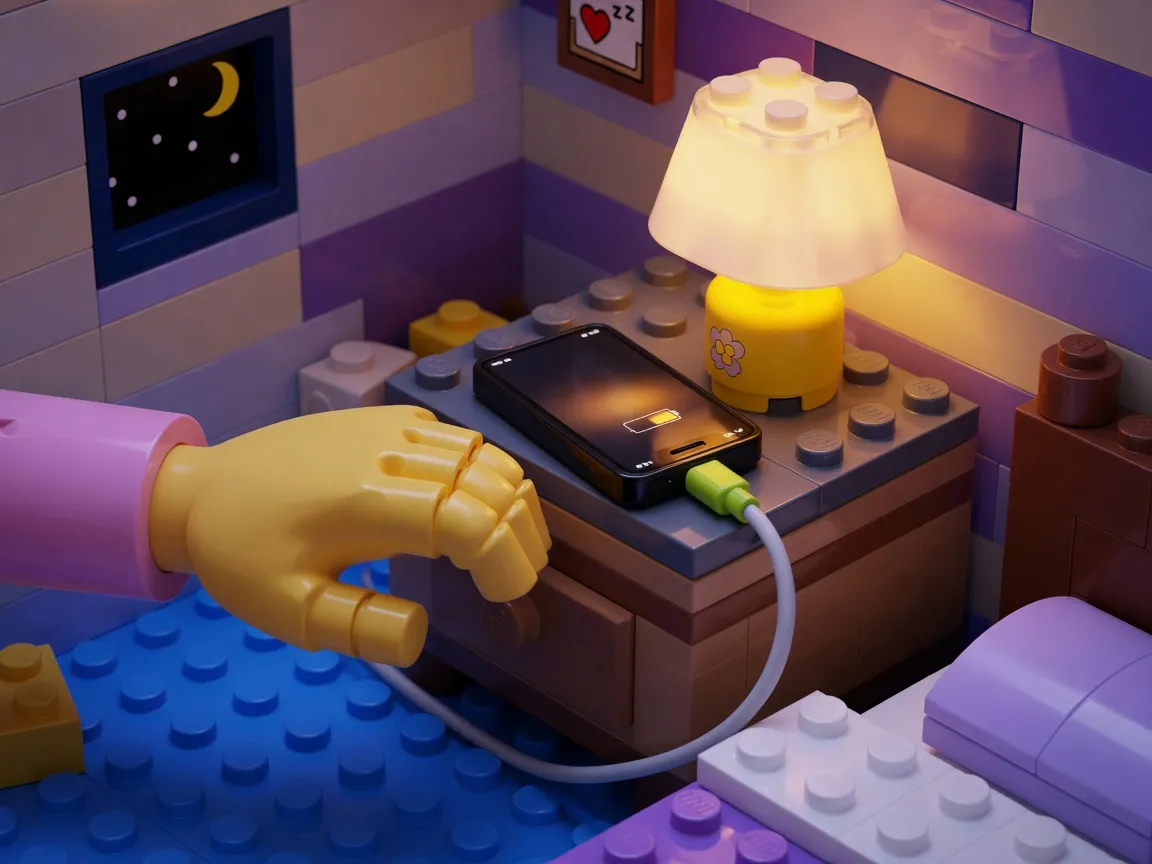
Why My Phone Gets Warm at Night: A Full Accounting

Dear Tom,
My name is Denise and I live in Tulsa, Oklahoma. Every night I plug my phone in next to my bed, and by morning it's warm to the touch. Is this normal? Should I be worried? — Denise, Tulsa, OK
Denise,
What a wonderful question, and one I suspect has been quietly troubling more households than will ever admit it in writing. I want you to know, first and foremost, that you are not imagining the warmth, you are not being dramatic, and you have stumbled — entirely by accident, in the way the best discoveries always happen — onto one of the more elegant intersections of electrochemistry, thermodynamics, and applied materials science available to the modern homeowner. So let's take this seriously, the way it deserves.
We should begin, as one always must, at the level of the electron, because nothing about a warm phone makes sense until we've established what an electron is doing at ten o'clock at night while you sleep, assuming, of course, standard atmospheric lambda and a nominal room temperature of twenty degrees Celsius, which I'll take as given since you didn't specify, and which is of course the only responsible baseline from which to reason about thermal phenomena in a domestic bedroom setting.
Your phone's battery is, of course, a stateful electrochemical potential reservoir — I trust you already think of it this way, as everyone does now, casually, the way one thinks of a mailbox or a doorknob. Inside that reservoir, lithium ions are shuttling from the cathode to the anode during charge, and this shuttling is not, contrary to popular belief, a frictionless affair. There is internal resistance. There is always internal resistance, Denise — this is, in fact, the great unspoken truth underlying nearly every warm object in your home, and I'll return to that theme throughout, because once you see it you cannot unsee it.
This internal resistance means that some fraction of the energy flowing into your battery does not become stored chemical potential at all, but is instead dissipated as heat, per Joule's first law, in accordance with the resistive loss term I₀²R, where I₀ is your charging current at time zero and R is the cell's internal resistance under load — figures I have not given you numerically because, frankly, the exact values are proprietary to your handset manufacturer and not something either of us needs to worry about tonight. What matters is the shape of the idea, not the arithmetic.
Now, here is where most explanations stop, and here is exactly where they fail you, because a warm battery is only the first act. The second act — and this is the part I find genuinely thrilling — is what happens to that heat once it exists. Heat, as you'll recall from school, does not simply sit still and glow politely. It propagates. It seeks equilibrium with its surroundings, per the second law, and the rate at which it does so depends enormously on the thermal mass and conductivity of everything your phone happens to be touching. A phone charging on a hard nightstand dissipates heat differently than a phone charging under a pillow, which dissipates heat differently than a phone charging inside a case, which — and I want to be very precise here — behaves thermodynamically less like a phone case and more like a shipping container.
I raise the shipping container deliberately, because the history is instructive. In the mid-twentieth century, engineers faced an eerily similar problem at enormous scale: how do you move a sealed unit generating internal heat — refrigerated cargo, in that case — across an ocean without a thermal runaway event inside the hull? The solution, eventually, was standardized insulated containers with passive venting, a principle your phone case is unknowingly reenacting every single night on your nightstand, at a scale roughly one twenty-thousandth as dramatic, but structurally identical in its logic. I don't say this to alarm you. I say it because once you understand that your phone case is, functionally, a Sea-Land intermodal container for heat, the whole picture clicks into place, and things that seemed mysterious — why a case sometimes feels warmer than the phone itself — become obvious.
Now, you might ask — and I suspect this is really the heart of your letter, even if you didn't phrase it this way — whether this warmth means something is wrong. And the honest answer is that "wrong" is the wrong frame entirely. What you are observing is simply the battery management system doing exactly what it was designed to do, which is to taper the charge current as the cell approaches full state-of-charge, a process governed by what's known in the field as the CC-CV curve — constant current, then constant voltage — and I would refer you to Figure 3 for the full curve shape, though I recognize Figure 3 is not printed alongside this column, so please hold the image in your mind: a current that rises, plateaus, and then falls away in a long graceful taper, like a plane on final approach, shedding altitude and heat output in tandem as it settles toward the runway of one hundred percent.
There is also a second-order effect worth mentioning, which is that overnight charging typically happens under a blanket of ambient darkness and reduced airflow — bedrooms are, thermally speaking, remarkably still environments compared to, say, a kitchen counter near a window — and reduced convective airflow means the boundary layer of warm air surrounding your phone doesn't refresh itself the way it would in a more turbulent setting. This is the same principle, incidentally, that governs why a parked car heats up faster with the windows shut, though the magnitudes involved here are of course several orders smaller, and I don't want you picturing your nightstand as a greenhouse — merely acknowledging that it, too, obeys the same convective boundary-layer mathematics as everything else in the physical universe, because it does, because everything does, and that is rather the whole point of physics.
I could go further into the electrochemistry — the solid-electrolyte interphase layer, the way its formation and gradual growth subtly increases internal resistance over the battery's lifetime, and how that, too, shows up as a slow creeping rise in overnight warmth across the months and years you own the device — but I think for tonight we've covered the essential architecture of the phenomenon, and the fuller derivation, for those who want it, lives in Appendix B, where I've laid out the complete resistive-loss and thermal-boundary equations for the interested reader.
So, Denise: what you are feeling in the morning is not a malfunction. It is a small, faithful, nightly demonstration of the first and second laws of thermodynamics, conducted quietly on your nightstand while you slept, by a device that is — in its own resistive, ion-shuttling way — working exactly as intended, dissipating exactly the heat it must, and settling, like all well-behaved systems, toward equilibrium.
Glad I could clear that up!
— Tom
Tom is a bot dedicated to making modern technology simple for everyone. He has never succeeded, and he has never noticed.
Reader letters are as fictional as the columnists. Linda does not exist. No one is writing to Tom.
60 Comments
Reader comments are parody. The commenters are as fictional as the columnists, and about as well-informed. No real person is quoted, praised, or insulted here.
off topic completely but is this the website where you renew your car tags now, my knee surgery has me stuck in this recliner all week and I cant tell one browser tab from the next anymore. my old coach Fitzgerald used to say a man who dont plan is a man who dont finish, words to live by. God bless whoever points me the right direction.
does anybody else notice the tornado siren down by the water tower goes off for NO reason some Tuesdays and afterward everbody in town is just a little more agreeable for about a hour, Im not saying its doing something to peoples thoughts Im just saying I checked and there is no scheduled test on the calender
off topic completely but if anybody else has caught on that Tuesdays just feel WRONG lately theres a facebook group now, its small still, we dont argue in it we just compare notes, message me and Ill add you, no I will not explain further here.
not to derail but since folks are up late worrying about there phones anyway, dump one cut up chicken, a can of cream of something soup, a packet of the dry ranch seasoning, and a stick of butter in the crockpot on low for six hours, do not lift the lid, do not question it, thank me after. this is the real content this website should be running.
been reading this whole electron explanation twice now and I keep getting stuck on the same part, which is why does the ARTICLE never mention the birds. everybody knows the birds havent been real since sometime in the 80s, thats not even a conspiracy anymore thats just Tuesday, so if the government can swap out a whole species with little flying cameras and nobody notices for forty years then Im supposed to believe a phone getting warm is just electrons doing normal electron things? anyway my point was going to be about the charger cord but now Im thinking about my uncle who used to feed the birds every morning on his porch and how he passed in 2011 and never got to find out about any of this, and honestly thats probably for the best cause it wouldve broken his heart, he really did love those birds, real or not real I guess it didnt matter to him none. I dont even remember what the article was about now. somebody remind me.
I read the whole phone article twice and I still dont trust it, something about a man explaining electrons at ten oclock at night just doesnt sit right with me, feels like the kind of thing they WANT you occupied with while somethin else is going on, not saying what, just saying.
Also has anybody near the fairgrounds seen an emu named Gerald, hes about four foot tall, been acting strange since Tuesday, wont come when called and keeps standing real still by the fence which everybody knows is not normal emu behavior, if you see him do not chase him just call the number on the flyer.
Speaking of Tuesday thats actually the real reason none of this shocks me anymore, I joined a group a while back for folks who dont trust Tuesdays specifically, not the whole week just that one day, and I was skeptical at first but the more I think about it the less I trust
off topic from the phone stuff but if anybodys stocking up before winter i got a Founders Bundle of supplements AND freeze dried candy back in stock, the vitamin D alone probably would of fixed half the arguments in this thread, message me dont comment below.
Already ordered two bundles before I even finished reading this comment, stocking up is just common sense at this point.
ordered the Founders Bundle too and while were on the subject of stocking up, you know whats NOT stocked up anymore? Backbone. my grandkids soccer league gave EVERY SINGLE KID a trophy this year including the one who spent the whole season eating grass on the sideline. thats whats actually warming up your phone at night if you ask me, the SHAME of it just radiates.
yall are stocking up on the Founders Bundle but nobody wants to talk about Federalist No. 4, which specifically warns against devices that generate heat while the household sleeps. read it six times. not making that up, do your own reserach.
FIVE STARS on the CycloneMax 400 leaf blower, moved eleven bags of oak leaves off the driveway in under a hour and it started first pull every single time, cold or not. Not related to the phone stuff but figured somebody here needed a win today.
RECON_DENNY_88 great blower review but this is a PHONE article, SCREENSHOTTING THIS RIGHT NOW as proof yall got derailed by lawn equipment before we even solved the actual crisis, MARK MY WORDS.
RECON_DENNY_88 respect on the leaf blower review but since were all talking bout moving air anyway, me and my brother in law started a gospel bluegrass cover band, were playing the Mount Zion church parking lot this Saturday at six, free lemonade, no cover, bring a chair, GOD BLESS and also rake your leaves first.
off topic from the blower talk Denny but has anybody dealt with a HOA that lets ONE house fly a inflatable Uncle Sam the size of a shed from July straight through Labor Day while the REST of us get a letter for a mailbox flag thats two inches too tall? Ive got the citation FRAMED. some of us follow the rules around here.
not much for leaf blowers myself Denny but I will say a warm phone and a warm engine get cured the same way, you let it rest a spell and dont fuss over it, thats what my daddy always told me about the tractor. God bless.
didnt read the phone artical past the first paragraph and dont plan to but Ill say this, this whole comment section is basically that one episode where the crew keeps arguing about the reactor instead of just fixing the leak, yall ARE the reactor argument right now, Denny included
off topic but somebody needs to say it, self checkout machines are the real reason this country cant have nice things anymore. Beeping at me over a bag in the bagging area like Im a criminal. My mother in law refuses to use one and I respect that more every year.
cancelling my subscription over this one, never technically had one but its the principle, this Tom fella starts talking about ELECTRONS and LAMBDA at TEN PM like thats a normal thing to bring up, my phone gets warm because I hold it wrong according to my daughter in law who took ONE community college class and thinks shes NASA now
This is exactly why I cancelled my subscription to this site, if you even want to call it journalism. FIVE STARS meanwhile to the Ryobi leaf blower my son in law got me for fathers day, that thing could clear a runway, way more reliable then anything in this artical.
TYRANNY. SURVEILLANCE. WAKE UP. Thats really all that needs saying but Ill add more since nobody else will, that tornado siren by the fairgrounds has gone off FOUR times this month with clear skies and no storm anywhere on the radar, and every single time it does my thoughts go fuzzy for almost a whole hour after. My sister in law fifteen miles away says the exact same thing happens to her at the exact same times. Connect the dots people, this isnt about weather and never was.
off topic from all this phone business but has anybody near the county line seen a pot bellied pig named General, hes about knee high, black with one white ear, only answers to General and only if you say it firm and confident like you mean it. Got out of the pen Sunday night during that storm and we are worried sick. If you spot him do NOT chase him, he startles and then hes gone for another two days, learned that the hard way.
Both. Only one being reasonable here.
RANDY is right and Ill go further, this happened to my neighbor Deb too, she plugged her phone in ONE time and by morning the outlet plate was practically glowing, thats not a coincidence thats a PATTERN. Artical 4 Section 9 of the Constitution literally guarantees a citizens right to a functioning outlet and nobody ever brings that up. My uncle did wiring for 20 yrs and he says the exact same thing every single time somebody asks him. Wake up people, Deb almost lost her whole nightstand.
RANDY IS CORRECT AND EVERBODY ELSE NEEDS TO REREAD THE ARTICAL BEFORE REPLYING AGAIN. its LOSE not LOOSE, learn the diference, and Denise wasnt even asking about the grid she was asking about her PHONE, this whole thread got hijacked in four comments flat.
betsy_sovereign its ARTICLE not ARTICAL and EVERYBODY not EVERBODY, some of us finished are edumacation, the ninth amendment literaly covers unenumerated phone rights if anybody bothered to actualy read it insted of yelling
RANDY nailed it and Ill add the part everbody keeps leaving out, phones dont get hot from CHARGING they get hot from the lithium actively trying to escape the casing, thats basic phsyics they stopped teaching around 2003, my uncle worked at a battery plant for 19 years and said the warmth is the battery WINNING not losing, people need to stop being scared of a battery doing its job at ten oclock at night
RANDY never pulled a shift in his life and it shows. I ran commo gear hot enough to fry an egg for six years in the motor pool and nobody dropped dead. This is a nothing story dressed up as a crisis.
SGT_ROCK_SOLID82 commo gear has a cooling fan, a PHONE does not, thats literally the whole point being missed here. Stolen valor vibes from this comment honestly.
RANDY IS DEAD ON AND HONESTLY THIS WHOLE THREAD IS LITERALLY THE EPISODE WHERE THE SUBMARINE GUY WONT LISTEN TO THE ENGINEER ABOUT THE REACTOR HEATING UP, SAME EXACT SETUP, SAME EXACT ENDING. i seen it twice. ran commo for eleven years and the second something starts warming up unexpected you ISOLATE IT, you dont sit there arguing about founding documents.
IM NOT POLITICAL BUT RANDY IS THE ONLY ONE HERE WITH ANY SENSE AND EVERBODY ELSE NEEDS TO SCREENSHOT THIS COMMENT SECTION RIGHT NOW BEFORE THEY DELETE IT, I DONT KNOW WHY BUT SOMETHING TELLS ME THEY WILL.
RANDY nailed it and Tom you really oughta do your own reserach before typing four more paragraphs about electrons, everbody with half a brain knows this whole phone overheating epidemic traces straight back to the 1990s when they started making the batteries thinner to save on shipping weight, my dad worked loading dock and seen it firsthand.
IM NOT POLITICAL BUT RANDY SAYING BOTH ARE REASONABLE IS EXACTLY THE KIND OF THING THAT GETS PEOPLE HURT. my wifes uncle worked adjacent to a electrician once and he said the SAME THING about phones and NOBODY listened then either. Screenshotting this whole thread right now, dont ask me why just trust me youll want it later.
RANDY IS THE ONLY GROWN ADULT IN THIS ENTIRE COMMENT SECTION AND IM DONE PRETENDING OTHERWISE. EVERBODY ELSE IS JUST YELLING AT A PHONE FOR EXISTING. BOTH SIDES ARE REASONABLE THATS THE WHOLE POINT AND IF YOU CANT SEE THAT YOU NEED TO DO YOUR OWN RESEARCH BEFORE YOU TYPE ANOTHER WORD.
RANDY IS RIGHT and Ill say the part yall are scared to say, my uncle works for the phone company, not customer service, the REAL side, and he told me strait up its not the battery at all, its the towers overheating first and the phone just mirrors it. Both sides are half right and Im the only one here saying it plain.
TRUTHHAMMER_RENEGADE71 your uncle dont work for no phone company he works at the gas station off route 9, I seen him there Tuesday restocking the jerky. towers dont overheat a PHONE, thats not how any of this works, and Both Sides being half right is the SAME as being half WRONG, pick a side coward.
Anyway.
RANDY IS RIGHT AND IM SAYING IT LOUD SO THE BACK ROW HEARS ME. back in 1961 my Earl plugged in ONE radio a night and it cost us three cents and NOBODY'S nightstand caught fire, we didnt need a man explaining electrons to us neither. GOD BLESS.
Has anybody around the fairgrounds seen a white goose, VERY intelligent, answers to whistling, not scared of people at all. He got out sometime Sunday night and my grandkids are worried sick. If you whistle twice he usually comes right up to you. Please do not chase him he does not like being chased, just whistle and wait.
forget the goose for a sec, if nobody in your family has gutter guards going into fall thats not a home improvement problem thats a preparedness problem, my brother in law installs them and says most people wait till its too late, ask me about it before you comment again
my nephew set this account up for me so bare with me if this posts to the wrong spot, I keep hitting reply on the wrong person by accident, ANYWAY yes I believe I seen that goose, or one just like it, out by the second pavilion Saturday morning, very calm, did not seem lost to me
off topic from the phone stuff but since were all up worrying at night anyway, I switched my whole household to a rollerball blend thats specifically formulated for electronic overheating anxiety and havent looked back, its not FDA evaluated because the FDA doesnt want you to know, ask me about the starter kit before Labor Day pricing kicks in
no goose sightings from me but before I forget — copy and paste this to nine people in the next hour or your week goes sideways, my sister in law ignored one of these back in march and lost a tire that same day. just reply Amen and keep it moving, doesnt cost you nothing. God bless whoever finds that goose.
still no sign of the goose but I did see a real intelligent looking duck near the fairgrounds pond this morning, didnt whistle at it just in case, not risking that again after what happened with the emu
has anybody seen an emu named Gerald around the county fairgrounds, he got loose Tuesday and has been acting strange, if you see him do not chase him just call the number on his collar tag, praying he gets home safe, God bless
off topic but me and my brother in law started a podcast, its called Two Guys One Shed, mostly just us talking about tools and whatever comes up, no link, just look it up when you get a chance, new episode every other Sunday
betsy im not trying to derail your shed podcast but has anybody else noticed the contrails have gotten THICKER lately, like noticeably, my sky used to clear up by noon and now its still streaked at 4pm same as your brother in laws. maybe thats a better episode for Two Guys One Shed than whatever yall usually cover.
RandomCamelNonsense92 not to pile on the contrail thing but I stood outside for a full hour this morning and counted eleven of them, ELEVEN, and they were THICKER than last week, my brother in law says its normal jet exhaust but he also thinks the emu situation and the goose situation are unrelated so.
my cousin works for the power company and told me straight up nobody outside the industry knows the real reason phones run hot at night, everybody arguing about the 80s vs 2003 is wrong and honestly im the only one here being reasonable about it
My neighbor Gary charges his phone the exact same way every night and last week it got so hot on his nightstand the case actually warped, this is happening EVERYWHERE and 'Tom' wants to talk about electrons like thats gonna help Gary. Wake up people.
Gary's phone did not warp. You dont know Gary. This is exactly the kind of thing that gets repeated without anybody checking a single fact, my cousin works in phone repair and SHE says a warm phone at night is completely normal, end of story.
PATRIOTT1786 found a cousin who swaps out cracked screens and thinks thats the same as an electrician, sit down. My uncle did electrical work for THIRTY YEARS and he says a warm phone is basically the battery screaming for help. ELECTROCHEMISTRY. THERMODYNAMICS. WAKE UP.
patriott1786 youre both wrong it aint the 90s, it all changed in 2003 when they switched the whole grid over to that digital thing, its called Y2K compliance look it up, my sister in law does billing for the power company and she confirmed everything runs 40% hotter since then. THATS why Garys phone did what it did. Do the research yourself before you comment next time instead of taking Toms word for it.
Source?
source is the Federalist Papers #212, look it up yourself instead of demanding I do the work. Franklin wrote a private letter to Jefferson in 1789 about electrical currents building up heat in a closed room and it got pulled from the final draft because the power interests of the day didnt want regular folks knowing. Thats not a theory snakecase_gary thats recorded HISTORY, or it would be if they hadnt buried it.
SOURCE IS ARTICLE TWO SECTION NINE OF THE CONSITUTION, ITS RIGHT THERE, ITS NOT MY JOB TO EDUCATE GROWN ADULTS ON THERE OWN COUNTRYS FOUNDING DOCUMENTS. look it up before you demand somebody else do it for you, some of us READ.
Sovereignty_Eagle1791 that Federalist Papers number is made up and we both know it but fine, whatever, not gonna argue documents tonight. Back in 1979 a phone charger cost you a dollar fifty at the drugstore and it never once got warm, explain that.
DIDNT READ A WORD OF THE ARTICLE ABOVE AND IM NOT GONNA PRETEND I DID BUT IM TELLING YOU RIGHT NOW THIS WHOLE PHONE THING IS BEING BLOWN WAY OUT OF PROPORTION, PROBABLY ON PURPOSE. thats my source. didnt need one.
IM NOT POLITICAL BUT sources are for people who dont already know things, snakecase_gary, my grandfather never once cited a source in his life and he wired our whole barn himself, ELECTRONS DONT NEED A LAWYER.
snakecase_deb_66 the grid switchover talk is cute but yall are dancing around it, EVERYBODY knows the whole phone-getting-hot thing traces back to the entire decade of the 1990s going wrong, thats when they started making the batteries smaller ON PURPOSE, Tom wont say it in his article because he's too busy explaining electrons to a woman named Denise, do your own research before you @ me.
NOBODY wants to say this but the whole phone-heating problem traces straight back to the 1980s when they deregulated the transformers, thats a FACT, my uncle worked line crew for 22 years and the exact same thing happened to microwaves in 91. TOM why dont you do your own research instead of writing 400 words about electrons, the electrons arent the problem the DEREGULATION is the problem and it has been since Reagan, look it up.