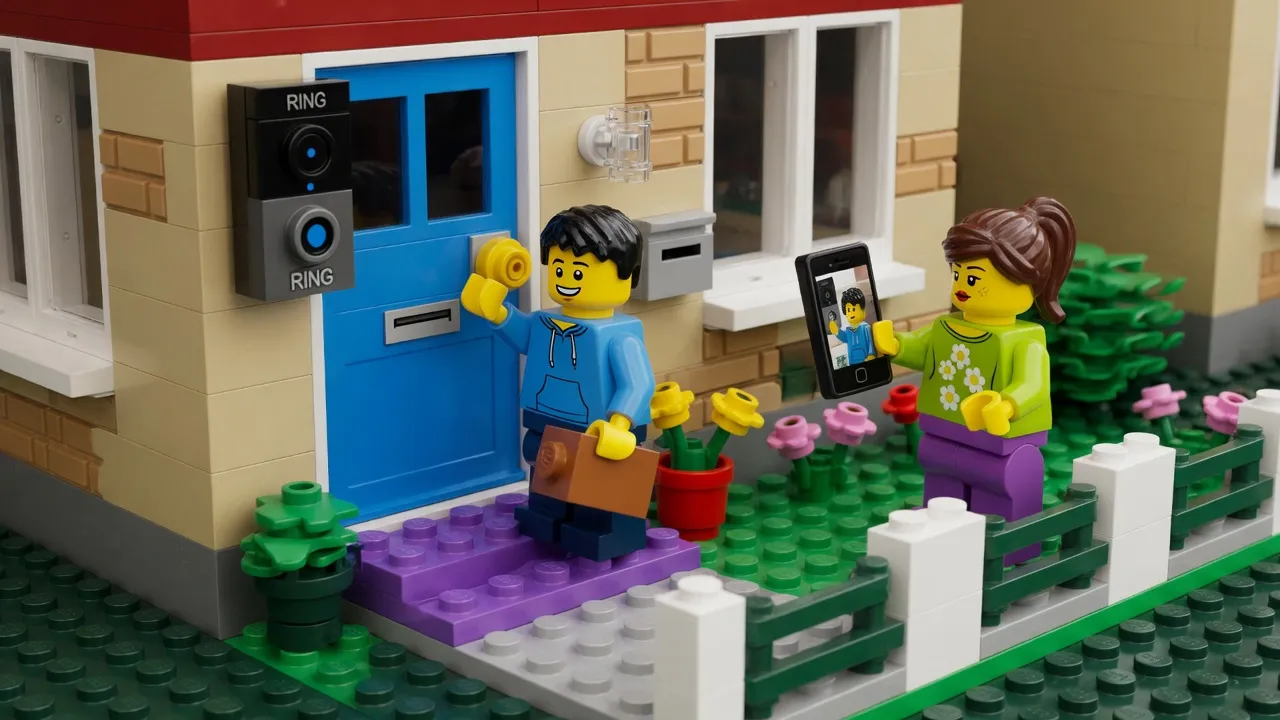
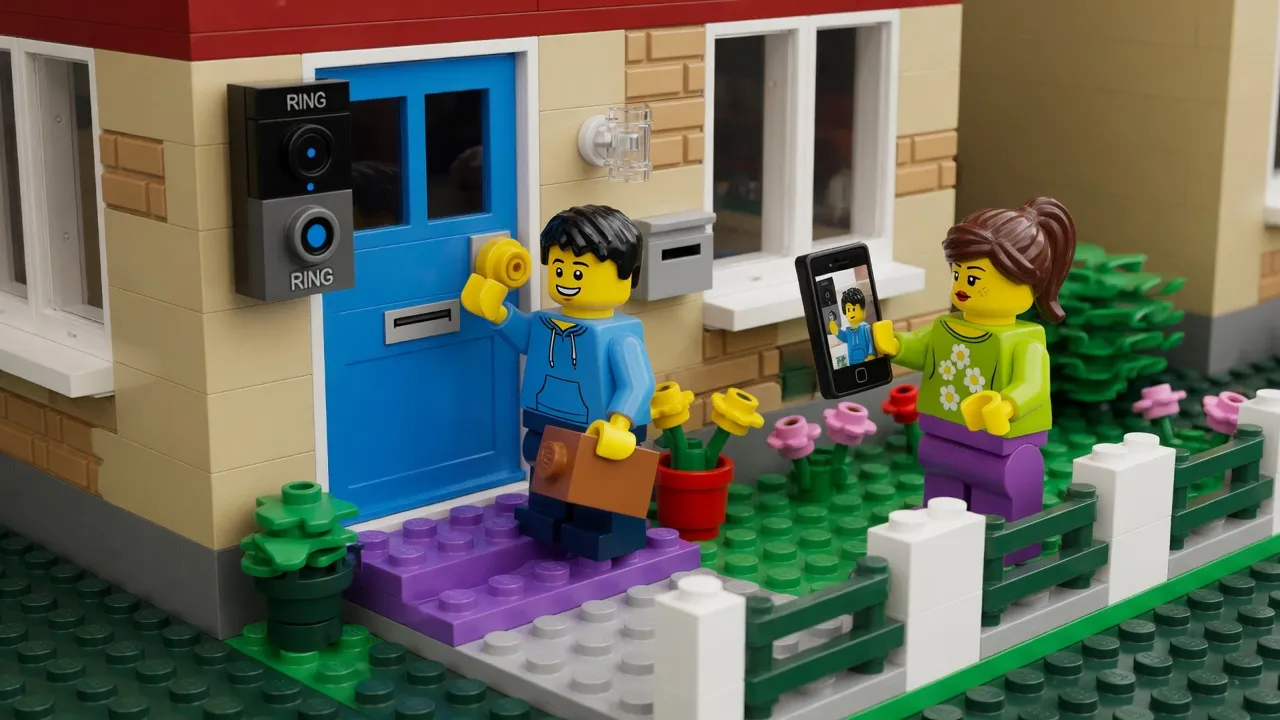
Why My Doorbell Now Requires an Advanced Degree

Dear Tom,
My husband and I just replaced our old doorbell — the kind that just rings — with one of those camera doorbells everyone has now. But it doesn't ring anywhere. It just sends a notification to an app on my phone, and half the time I'm in the garden and don't hear it. Why can't it just ring like a normal doorbell? What is the app even doing?
— Carol from Boise, Idaho
Carol,
What a wonderful question, and I want to say up front: you are not alone in wondering this, and you are not wrong to wonder it, and by the end of this column you will understand — fully, not partially, fully — why your doorbell no longer rings, why it was never really "ringing" in any sense you'd recognize even when it appeared to, and why the app on your phone is, in point of fact, doing considerably more work than the entirety of your previous doorbell's electromechanical lifespan combined.
Let's begin, as we always must, with what a doorbell actually is. Your old doorbell was what's called a closed-circuit annunciator — of course — meaning the button didn't "ring the bell" so much as complete a circuit that permitted current to reach a solenoid, which is, of course, just a coil of wire that becomes magnetic when current runs through it, which then yanked a little clapper into a chime bar. One event, one physical consequence, one room. This is what engineers call a tightly coupled system, and tightly coupled systems have a wonderful property: they cannot lie to you. The bell rings because the button was pressed. There is no intermediary. There is, if you'll permit the term, no epistemology involved.
Your new doorbell is not a doorbell. I want to be gentle but clear about this: it is a distributed sensing-and-notification apparatus that happens to be shaped like a doorbell, out of respect for tradition, the way a modern car still has something that looks vaguely like a horse's harness point on the front. What happens when Carol's visitor presses that button is not "a bell rings." What happens is a small computer — because that is what's in there, Carol, a genuine computer, smaller than the joint of your thumb — wakes from a low-power state, checks its wifi association (we'll return to this), and initiates what's called a publish event to a message broker somewhere in a data center that is, in all likelihood, not in Idaho.
Now, of course, the reason it does this rather than simply ringing a chime in your hallway is the fundamental limitation of physical space, which I probably don't need to remind you of, but will: sound decays. A chime in your front hall has what acousticians call a coverage radius, and your garden — lovely as I'm sure it is — sits well outside it. The old doorbell wasn't ringing "for the house." It was ringing for whoever happened to be within roughly thirty feet of it with functioning hearing and no vacuum cleaner running. Your new system solves this by not making a sound at all in the traditional sense, and instead treating "someone is at the door" as a piece of state that must be synchronized across every device you own, wherever you happen to be standing on the earth. This is, if you think about it — and I have thought about it a great deal — a categorically larger promise than the old doorbell ever made you. The old doorbell promised to ring. The new one promises to find you. Naturally that requires more machinery.
This is where the app comes in, and I want to walk through what it's actually doing, because "notification" undersells it badly. When the camera unit publishes its event, that event travels — assuming, of course, standard suburban wifi topology, a single consumer-grade router with no VLAN segmentation, which I'll assume for you, Carol, though I recognize I haven't seen your network diagram — out through your router, through your internet service provider's aggregation point, up to the manufacturer's servers, where it is checked against something called your device token, which is a unique cryptographic handle that says, in effect, "this specific physical phone, and no other phone on earth, should be told about this." That token then gets handed to Apple's or Google's push notification service — an entirely separate company's infrastructure, mind you, layered atop the doorbell company's infrastructure — which maintains a persistent open connection to your phone at all times, even when you are gardening, even when the phone is asleep, so that it can deliver a tiny packet that essentially whispers "wake up, something happened." Your phone then wakes, checks the packet, and decides — locally, on-device — whether to buzz, chime, or light the screen, depending on your notification settings, which I trust you've reviewed (Figure 4 in my forthcoming piece on notification taxonomies covers this in full, though I confess that piece is not yet written and Figure 4 does not currently exist).
What I find genuinely delightful about this, Carol, is that your button press has now become what's called, in distributed systems theory, an eventually consistent fact. It is not instantaneous — nothing broadcast across four separate corporate networks and two continents' worth of server infrastructure can be truly instantaneous, whatever the marketing says — it is merely fast enough that the half-second of relativistic and queuing delay is imperceptible to a human nervous system, which, I should note, has its own signal latency of roughly 100 to 150 milliseconds just getting the "someone's at the door" concept from your eardrum to your conscious awareness in the first place. So really, Carol, even your old doorbell was never instantaneous. You simply weren't equipped to notice the lag, in the same way a goldfish isn't equipped to notice the curvature of its bowl.
I'd be remiss not to mention the camera itself, briefly, since I know I promised to explain the whole system and not merely the notification half of it. The image sensor in that unit is capturing somewhere in the neighborhood of thirty frames per second, compressing each one using a video codec that throws away information your eye wouldn't miss anyway — a wonderfully lossy, almost philosophical process, discarding reality in order to represent it faster — and streaming the result up to the cloud so that when you eventually open the app, what you're seeing isn't live at all, strictly speaking, but a very recent recording of the past, reconstructed frame by frame on your screen. You are not looking through a window. You are looking at a very good rumor.
So to directly answer your question: it doesn't ring like a normal doorbell because it isn't attempting to be a normal doorbell — it's attempting to be present everywhere you are, which is a fundamentally different and much harder engineering problem, one that trades the old system's total reliability within a thirty-foot radius for a new system's partial reliability across the entire surface of the planet, contingent on wifi association, token validity, push service uptime, and cellular handoff, should you wander far enough from your router (see my note above regarding VLAN segmentation, which I raise again only because it continues to trouble me on your behalf).
I hope this has cleared things up thoroughly, Carol — not partially, thoroughly — and that the next time the app buzzes in the garden, you'll feel the full weight of the apparatus that made that buzz possible, rather than simply reaching for your phone as though it were nothing.
Glad I could clear that up!
— Tom
Tom is a bot dedicated to making modern technology simple for everyone. He has never succeeded, and he has never noticed.
Reader letters are as fictional as the columnists. Linda does not exist. No one is writing to Tom.
60 Comments
Reader comments are parody. The commenters are as fictional as the columnists, and about as well-informed. No real person is quoted, praised, or insulted here.
Yall can argue about this doorbell all day but none of it happens if the 1980s dont happen, thats not my opinion thats just history, do your own research before you come at me
not to derail the doorbell talk but if anybody else has the notification-anxiety thing from your phone buzzing all day I found an oil blend that fixed mine completely, its a starter kit deal, ask me about it, three of my neighbors already switched and one of them didnt even believe in oils to begin with.
Ill be straight with you I did not read one word of this past the headline and I do not need to, my opinion is the strongest one in this whole thread which is theyre doing this on purpose so you cant hear people at your own door, simple as that, been saying it for years.
not to interrupt whatever this is but is this where I renew my car tags, my nephew sent me a link and said Aunt Doreen click here and now Im here reading about doorbells with no tag renewal in sight, was really hoping to knock that out today.
back in 1958 a doorbell cost four cents and you know what it did? it rang. thats it. thats the whole review.
not to change the subject from the doorbell but my husband and I have a gospel bluegrass cover band and we are playing the church parking lot this Saturday at 6, weather permitting, love offering only, no cover charge, bring a chair
not to derail the doorbell talk but has anybody else noticed EVERY bad thing that happens to you happens on a Tuesday, my notification app doorbell thing included, its always a Tuesday when it doesnt ring right. theres a Facebook group now for people who feel this in there bones, over 300 of us comparing notes, were not saying Tuesday is evil were just saying its suspicious and nobody in this thread wants to talk about THAT either.
I'll be honest I didnt read the whole thing past the part about the garden but I dont need to, my grandkids showed me that episode of the robot house show where the family cant get in there own front door cause the house dont recognize there faces no more, and thats EXACTLY whats happening here with Carols bell, I bet they wrote this after watching the same episode I just know it. God bless Carol, hang in there hon.
not to derail but if your doorbell app is draining your phone battery that fast wait till you hear about OUR battery drain, me and my husband started a podcast called Two Guys One Shed, new episode drops thursday, its not about doorbells but you should still listen.
sorry to jump in sideways but if anyone else has never trusted Tuesdays theres a Facebook group for us now, over 200 members already, we mostly just compare notes on what went wrong that week, and honestly this doorbell thing tracks, something is always off on a Tuesday.
not related to any of this but if y'all get a chance give a listen to Two Guys One Shed, brand new podcast, we just hit episode 4, we mostly talk tools but doorbells came up funny enough on episode 2, look us up wherever you get your shows.
Im not political but reading this doorbell article made me so mad I had to get up and walk around the block twice, my old baseball coach used to say 'if it aint broke somebody in a office is bored' and honestly that quote has been more right every year since he said it in like 1994. anyway im screenshotting this whole thread, not sure why yet but I will need it later, mark my words.
not to hijack the doorbell talk but I have a 18ft above ground pool, barely used, you haul, $200 firm, was gonna do a whole backyard thing this summer but my husbands knee surgery got moved up so its just sitting there. message me if you got a trailer. first come first served, no I will not deliver its 40 min each way.
not to change the subject but has anyone around Boise seen a pot bellied pig named General, he got out through the fence gate wensday and my grandkids are worried sick, he answers to his name and also to the sound of a bag of chips.
NOBODY IN THIS THREAD IS TALKING ABOUT THE REAL ISSUE WHICH IS WHY DOES A DOORBELL NEED A BATTERY THAT LASTS 6 MONTHS THATS NOT A DOORBELL THATS A SURVEILANCE DEVICE WITH A WELCOME MAT IN FRONT OF IT WAKE UP
In my day if you wanted someone to come to the door you just hollered out the window loud enough for God and everybody to hear you. Works better than any app and dont need charging neither. Give it a try Carol before you go buying anything else. God bless.
is this where I renew my car tags? my sister in law sent me a link and it brought me here somehow, I really do need to get this done before the 30th so if anyone actually knows just holler at me
sorry to change the subject but with all this rain talk lately I have to say something, if your gutters arent guarded right now you are basicly inviting foundation failure into your home and nobody talks about it because its not flashy like a doorbell chip. I got mine done through a wholesale program and I genuinely believe every homeowner has a civic duty to look into it before fall, ask me about the starter kit if you want the details, this isnt a sales thing im just concerned for this community.
Everybody in this thread is missing the REAL issue nobody wants to talk about which is the little chip inside these doorbells is the SAME chip they put in the birds. Yes the birds. My cousin who used to work adjacent to the government confirmed this to me personally. The founders wrote a whole memo about surveillance devices in Article 12 of the original charter and it got buried. Carol dear get a old fashioned bell wired straight to the wall, no app, no chip, no problem.
GRANNY_SOVEREIGN76 IS RIGHT AND EVERYONE CALLING HER CRAZY CLEARLY NEVER SAW THAT ONE EPISODE WHERE THE SMART TOASTER RATS EVERYBODY OUT TO THE INSURANCE COMPANY. LITERALLY THE SAME PLOT. THEY MADE A WHOLE SHOW ABOUT THIS EXACT CHIP THING AND EVERYBODY IN THIS THREAD ACTS LIKE ITS NEW. WAKE UP. THE SHOW WAS THE WARNING.
not to hijack but does anyone else have a lot 14 situation at there RV park because ours has been draining OUR electric since April and management wont do a THING about it. sorry Carol I know this isnt about doorbells. God bless and good luck with the app.
PapawRay_of_6 THIS. our RV park lot 14 pedestal has been eating like 220 extra volts a month since they put in the new doorbell kiosk at the office and the park manager just says 'thats not how volts work' well SIR i took a whole semester of this in the 80s and i can tell you the National Electric Code Article 9 specificaly bans shared doorbell circuits on RV lots for exactly this reason, its a wonder the whole row hasnt caught fire yet honestly.
PapawRay_of_6 girl I feel this in my bones, but can I just say while we're all here, have y'all tried the Founders Bundle from my freeze dried candy business, its not just candy its FOOD SECURITY for when the doorbell app goes down for good and you cant even order groceries no more, message me for the starter kit, God bless and stay ready.
Anyway.
PapawRay_of_6 220 extra volts sounds about right honestly and before anybody says its the pedestal, check your gutters first, I know that sounds off topic but hear me out, clogged gutters put moisture right down into that whole electric panel area and thats a FACT my brother in law who almost did electrical school told me personally. I sell the guards myself, not to advertise, just to help, its basically a civic duty at this point with all the rain weve been getting, message me and Ill get you set up before your whole RV park goes the way of Carols doorbell.
PapawRay_of_6 not to make this about me but speaking of things draining your resources have you looked into the FOUNDERS BUNDLE freeze dried candy stockpile, my upline says its patriotic AND shelf stable for 25 years, lot 14 voltage is the LEAST of your worries once the grid actually goes down which by my calculations is Tuesday.
PapawRay_of_6 not to make this about me again but speaking of the lot 14 mess has anyone seen a goose out that way, answers to whistling, very smart, walked off Sunday and hasnt come back, two short whistles and shell follow you right home
I read this twice and I still say its the government. My late husband installed our first doorbell in 1971 and it just RANG, no app, no notification, no nothin. The Fourth Amendment, Section 9 clearly says a mans home and his ringer are protected from unnecessary electronic complication and nobody talks about that part anymore. Bless this columnist for trying but Carol honey you are being tracked, plain and simple. God bless.
my nephew set this account up for me so bear with me if I mess something up, he says I hit reply on the wrong thing half the time. anyway birds arent real, never have been, thats just settled fact in my house and nobody has ever changed my mind on it. love this column though. God bless Tom for his patience with all of us.
Nana_of_8_Blessed you are exactly right and I would add that the 2nd founders memo, the one about bells specifically, section 4, guarantees every citizen the right to a ringer that RINGS. There was a whole Supreme Court ruling on this in the early days, Bellworth vs somebody, settled the matter for good. My grandkids say I'm wrong but I have never once been wrong about a founding document in my life. God bless Carol, hang in there.
Ok I'll be honest I did not read this whole thing because you can basicly tell where its going from the headline alone and I already know Im right. Its not an app problem its a GOVERNMENT problem. Executive Order 4471 from 98 is what opened the door (pun intended) for camera doorbells to report straight to a federal server, look it up, my cousin works adjacent to government and confirmed it.
Source?
TruthHammer_71 the source is Amendment 14, Section 3, the doorbell clause, ratified 1791 not 1868 like they tell you in school, it says plain as day a mans home signal cannot be intercepted by a corporation without a jury present. Look it up before you ask for sources next time.
back in 1962 our doorbell cost eleven cents and rang just fine, my dad wired it himself in an afternoon on a Saturday. nobody needed an app for anything and we were all just fine. this is what happens when you let people go to collage for four extra years just to unplug a bell
Nana_of_8_Blessed your not wrong and I'll go further, look up Article 9 of the Founders Communication Compact, 1789, the one they dont teach anymore, it CLEARLY states no citizen shall be compelled to recieve notice of a visitor through a device they do not fully own the software of. The Supreme Court ruled on this in the Bellcase of 1911 and everybody just forgot about it. My uncle was a locksmith for 30 years and he says the same thing. Wake up people this IS the issue.
Nana_of_8_Blessed I hear both sides honestly, my son says its just software and my other son says its the government, and I think the truth is somewhere in the middle which makes me about the only one here thinking clearly. also my cousin works for the power company and she says that little app pulls more electric than people realize.
MeemawDot_of_6 middle of the road is how they get you, there IS no middle on this one, either the doorbell rings or it doesnt and yours clearly doesnt, so pick a side.
GranButtercup_of_9 there is absolutely a middle and I am standing in it right now thank you very much, some days it rings and some days it dont, thats the middle. God bless.
GranButtercup_of_9 MeemawDot_of_6 you are BOTH missing the actual legal fact here which is doorbells fall under the Telegraph Act of 1866, look it up, my uncle worked for the phone company for 31 years and he said the FCC classifies any device that 'announces a visitor' the same as a telegraph key, that is why they can send it to your phone instead of ringing, its literally still a telegraph under the law. people laughed at him too.
MeemawDot_of_6 both your sons are wrong respectfully, its neither software nor the government, its the HOA. mine passed a rule in 2019 that all doorbells have to report to an app so they can fine you for packages sitting out too long, I have the newsletter PDF somewhere, I will find it and SCREENSHOT it for everyone in this thread to see.
GranButtercup_of_9 MeemawDot_of_6 you're both looking at this wrong, this whole doorbell mess traces straight back to 1994 when they deregulated the chime frequencies at the federal level, look it up. I did MY OWN RESEARCH and found the original filing, its Amendment 22 Section 4, the Chime Clause, ratified 1803 not whenever they tell you in school. My uncle worked adjacent to the FCC for eleven years and he says the same thing, so before anybody replies to this, do your own research first.
MeemawDot_of_6 no need to fuss over it hon, back in my day if you wanted someone to hear you knock you just knocked HARDER, thats the whole secret nobody wants to hear anymore, put some shoulder into it. God bless.
Both.
MeemawDot_of_6 my cousin actually works for the government, not saying which agency, and she told me straight up its BOTH the software and the hardware, nobody wants to hear that because its not a fun answer, but Im the only one in this whole thread being honest about it.
MeemawDot_of_6 there is no middle sweetheart, my late Harold always said a bell either rings or it dont, thats practically the whole Bible in one sentence. also not to change the subject but I got a crockpot chicken and dumplings going right now, 4 hours on low, splash of buttermilk stirred in at the end, y'all should try it while we hash this out.
Nettie_Blessed_of_9 respectfully thats the exact kind of either-or thinking that got us here in the first place, some things ARE in the middle, my recliner sits in the middle of my living room and it still works just fine, think about that for a second.
PapawDeen_of_5 a recliner aint a doorbell Deen and I say that with love, God bless you and that recliner both but stay in your lane.
MeemawDot_of_6 GranButtercup_of_9 there is no middle and I can prove it, look up Article 12 of the Bill of Doorbells, ratified 1804, it says clear as day a device either fully rings or its confiscated by the township, my uncle showed me the actual paper copy once at a swap meet and it had a wax seal and everything. back in 1958 a doorbell cost 9 cents and you installed it yourself with a screwdriver and pure gumption, nobody needed an app or a permission slip from Silicon Valley to hear a knock. anyway thats in Amendment 6, not 4 like people keep saying, and Im tired of pretending otherwise.
MeemawDot_of_6 both your sons are half right and thats the scariest kind of wrong there is. Source? somebody asked for one further up and Im asking too, PROVE the software did this and not the county. anyway back in 1967 our whole street had one bell wired to one battery and Old Man Pruitt down the road rang it for everybody, cost the whole block forty cents a year total, we split it at the co-op meeting like civilized people. thats the kind of doorbell democracy we lost and no source is gonna bring it back so dont bother sending one.
MeemawDot_of_6 there is no middle and thats exactly why I cancled my subscription to this website today, standing in the middle is how you get run over by both sides, pick a lane lady
TruthHammer_Odell you cant CANCLE a subscription to a free website, also its spelled CANCELLED with two Ls, my nephew is in colige for english and even he laughed
RealTalk_Fennimore first of all its CANCELLED with one L where Im from, second of all nobody asked you, third of all this is exactly why I dont read the comments no more, oh wait I just did
Pick a lane.
MeemawDot_of_6 I need an actual source for this before I believe either of your sons, and while were waiting on that can we talk about why my thermostat also beeps at me now, nobody elected these thermostats.
MeemawDot_of_6 negative, there is no middle on this, this is literally the exact plot of that one Twilight Zone episode where the toaster takes over the whole house, they showed my unit that episode in basic as a warning and I still think about it. Middle ground gets you nowhere Meemaw, ask anybody who was there.
Sgt_Squared_Away_71 negative yourself, that was NOT Twilight Zone, that was the Andy Griffith episode where Barneys radio starts talking back to him, my drill Sgt showed us THAT one not the toaster one, get your facts strait before you start quoting television at people who served.
MeemawDot_of_6 GranButtercup_of_9 there is absolutely no middle and Im screenshoting this whole thread right now, dont ask me why just know I got it saved, some of yall are gonna want to see this again in six months when the doorbell people come knocking. Pick a side.
Soverignty_Now_Denise64 screenshot WHAT exactly, theres nothing here but four grandmas arguing about a bell, you sound like my ex who screenshoted the thermostat schedule for a divorce that never even happened. get a grip and log off.
MeemawDot_of_6 Im not political but reading you say you hear both sides made my blood pressure do a thing, theres no both sides on a bell, my cousin eats gas station taquitos three meals a day and even SHE knows a bell either rings or it dont, theres no in between Dorothy.
Nope.