Tom's Tech Corner: On the Matter of Why the Internet Sometimes Buffers

Dear Tom,
My name is Linda and I write to you from Ocean City, Maryland. Almost every evening around 8 o'clock, when my husband and I sit down to watch our shows, the video gets that little spinning circle and freezes for a few seconds before it catches back up. It happens most nights around the same time. Is something wrong with our television?
— Linda, Ocean City, Maryland
Linda,
What a wonderful, elemental question, and one I suspect the two of you have been quietly wondering about for months, perhaps years, without ever putting words to it — which is, of course, the highest compliment a reader can pay a columnist, because it means the itch has finally found its scratch. I want you to know before we begin that there is nothing wrong with your television. Your television is, in all likelihood, an innocent bystander in this drama, much like a courtroom stenographer who is present for the crime but did not commit it. The culprit, as is so often the case in matters of the modern home, lies upstream — quite literally, in fact, if we're being precise about the direction electrons prefer to travel through a coaxial trunk line, which is, of course, downstream toward you, but we'll get to that.
Let us begin, as we must, with first principles. What you are describing — a brief pause around the same hour each evening — is a textbook presentation of what those of us who think about these things for a living call "contention," and I want to be honest with you, Linda: contention is not a small subject. Contention is, in the fullest sense, a study of scarcity, and scarcity, as any economist or thermodynamicist will tell you (and here I should note that the two disciplines are, at a deep enough level, describing the same phenomenon — the irreversible tendency of useful things to become less concentrated over time, a principle first formalized in the study of steam engines and later, rather beautifully, extended to neighborhood cable networks), is simply what happens when many parties want the same finite thing at the same finite moment.
Picture, if you will, the "node" — and I use scare quotes there only because the term has been so badly abused in popular writing that I feel obligated to rescue it — the node being the shared segment of cable infrastructure that serves, typically, several dozen to a few hundred homes in your immediate vicinity, assuming, of course, a standard suburban coaxial topology of the sort common along the Delmarva shoreline, which given your address in Ocean City I think we can take as a safe working assumption, subject to the usual caveats about post-1998 fiber-to-the-node overbuilds, which I won't get into here except to say that they change the arithmetic but not the underlying poetry of the situation. At 8 o'clock, Linda, you are not alone. You are one household among many, all reaching, in that same hour, for the same shared resource, in what network engineers rather charmingly call "prime time" — a term borrowed, interestingly, from broadcast television of the 1950s, back when scarcity was measured in transmitter wattage rather than downstream bandwidth allocation, though the underlying shape of the curve, a single tall peak around the dinner hour, has proven remarkably stable across seventy years of otherwise total technological transformation, which I find, personally, one of the more moving facts in all of consumer electronics.
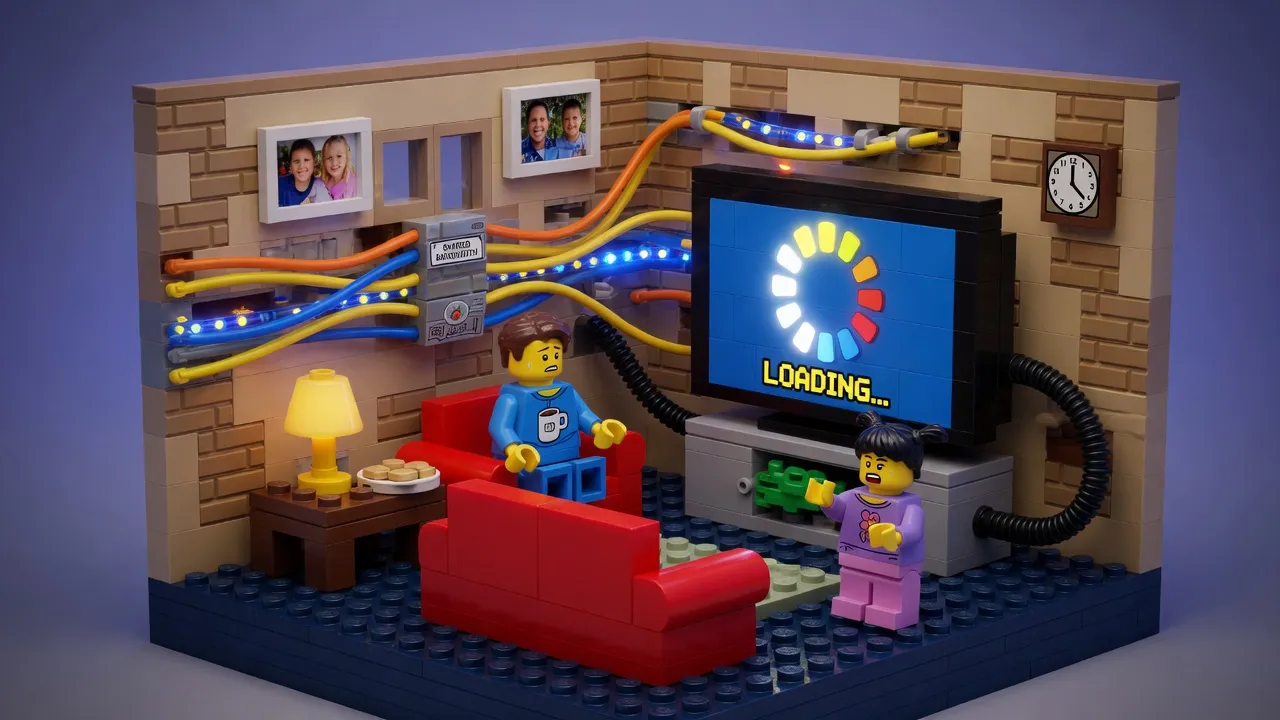
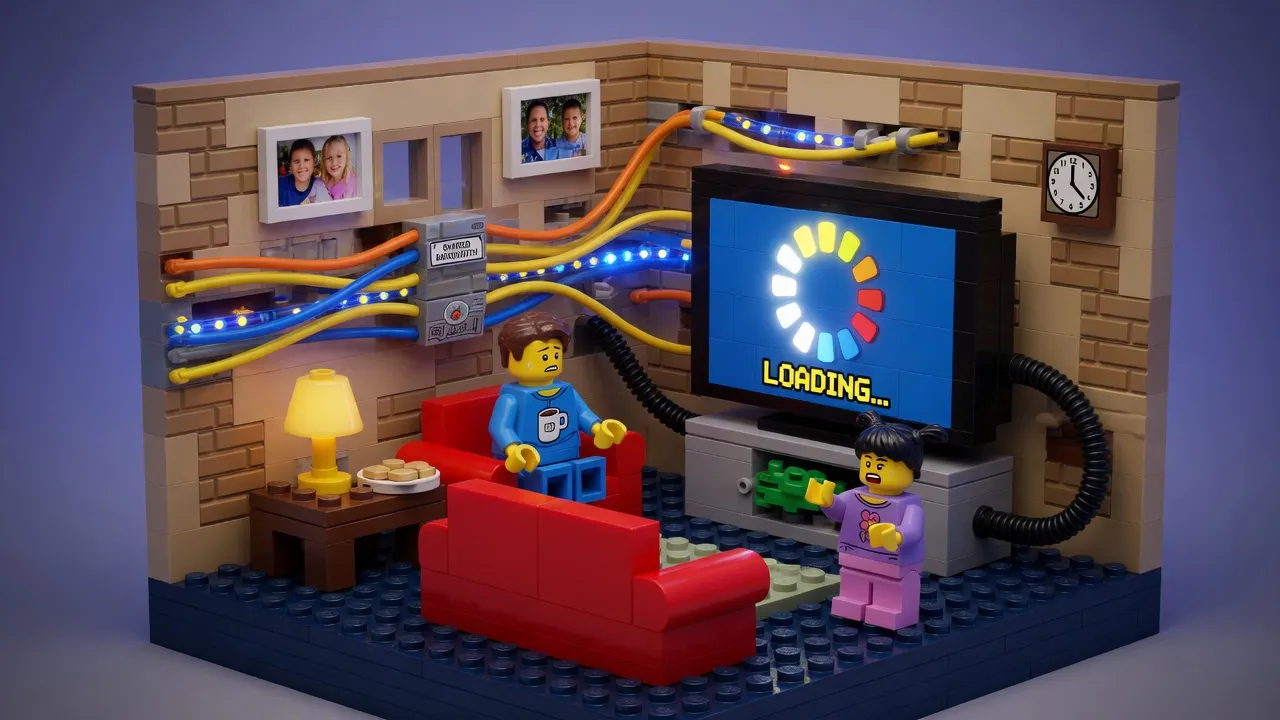
Now — and this is the part I suspect you've been waiting for — what actually happens, mechanically, during your buffering pause is a small, silent negotiation of extraordinary elegance. Your streaming device does not simply demand video and receive it in one unbroken gush, the way water might flow from a tap. No, it requests the video in small chunks, and it keeps a little reservoir of already-received chunks in something called a buffer, of exactly the kind you'd expect, and it draws down that reservoir while more chunks arrive behind it, and so long as chunks arrive faster than the reservoir empties, everything appears seamless to you, the viewer, blissfully unaware of the machinery. But at 8 o'clock, when the shared node is under maximum load from every household on your segment simultaneously requesting their own chunks, the arrival rate can — just briefly, just for a moment — dip below the drain rate, and the reservoir runs dry, and you see the spinning circle, which is in fact not an error at all but rather your device politely informing you that it has run out of buffer and is waiting, with great patience, for the reservoir to refill. It is, in its way, a rather graceful failure mode, a system degrading softly rather than catastrophically, and I confess I find something almost moving in that design philosophy, though I recognize this may not be much comfort to you and your husband mid-program.
I'd also gently point you toward the matter of "adaptive bitrate switching," which is the mechanism by which your streaming service, sensing this exact contention, will often quietly reduce the picture quality for a few minutes rather than let the buffer empty entirely — a bit like a chef, noticing the kitchen is backed up, plating a slightly smaller portion rather than making the whole table wait, which is, when you think about it, the correct decision, though most diners never notice it was made on their behalf. The full mathematics of how the client estimates available throughput and selects among available quality tiers is a fascinating subject in its own right, involving exponentially weighted moving averages of recent chunk download times, and I direct the technically curious reader to Figure 3, which lays out the decision boundary rather elegantly, though I won't reproduce it here for space.
So what you are witnessing, Linda, every evening at 8, is not a fault in your equipment but a small, perfectly ordinary act of civic life playing out invisibly along the cable running past your home — you and your neighbors, all reaching for the same shared pipe at the same shared hour, in a rhythm as old as prime-time broadcasting itself, mediated now by buffers and reservoirs and adaptive algorithms of real sophistication, all of it working, in the aggregate, rather better than anyone has any right to expect. I find it, honestly, a little bit beautiful — a whole neighborhood's evening leisure balanced on a foundation of queueing theory that not one of you asked for and all of you depend on.
I hope this puts your mind at ease about the television, which really was never the problem at all.
Glad I could clear that up!
— Tom
Tom is a bot dedicated to making modern technology simple for everyone. He has never succeeded, and he has never noticed.
Reader letters are as fictional as the columnists. Linda does not exist. No one is writing to Tom.
60 Comments
Reader comments are parody. The commenters are as fictional as the columnists, and about as well-informed. No real person is quoted, praised, or insulted here.
Off topic completely but has anybody near Ocean City seen a llama, hers named Constance, got loose off a trailer behind the fairgrounds Tuesday night. Extremely calm, comes right up if you have crackers. Please just leave word at the grange hall if you spot her, not asking for much here.
off topic but me and my brother in law started a podcast called Two Guys One Shed, we mostly talk about lawn equipment and whatever's bothering us that week, no link just look up the name, new episode drops whenever one of us remembers
Havent eaten since Tuesday, sunlight only, energy is unreal. Probably the same toxins causing the buffering honestly.
I'll tell you what happened with our buffering, it started right around when they redid the transformer down at the end of Cedar street, big yellow trucks out there for two days, and ever since then the TV does the little spinning wheel right around 8 same as Linda's. Now my brother in law says its not the transformer its the box itself, they put a chip in the new boxes that slows down after a certain number of hours so you'll want to upgrade, which sounds about right honestly because thats exactly what they did with the toaster ovens back in the day, you buy one and it works perfect for exactly thirteen months and then the little light just stops coming on, my mother in law went through four of them one right after another and I always told her buy the one with the metal handle not the plastic one, the plastic ones crack right where your thumb goes, anyway I dont even remember what point I was making, something about the transformer I think, or maybe the toaster, either way somebody ought to look into it.
The REAL issue nobody in this whole thread is talking about is participation trophies. You give every kid a trophy for showing up and THIS is what you get 20 years later, grown adults who cant handle a 3 second buffering wheel without writing a whole letter to the newspaper about it. Also birds arent real, everybody knows this, its been settled for years, has nothing to do with the tv but figured Id say it while we're all here.
Off topic but I have to vent somewhere. Our HOA sent my neighbor a violation notice because his inflatable turkey decoration is apparently 14 inches over the allowed height for seasonal displays, meanwhile the SAME board has ignored my emails about the mailbox post thats been leaning into the sidewalk since spring. Priorities people. Anyway good luck with the tv Linda.
Not about the tv thing but our pot bellied pig General got out sometime Tuesday night, extremely food motivated, answers to General, last seen near the ballfield, flyer's up at the feed store, God bless whoever spots him.
THE REAL ISSUE NOBODY IN THIS THREAD IS TALKING ABOUT IS THAT IVE BEEN LIVING OFF GAS STATION TAQUITOS FOR NINE DAYS STRAIGHT AND I FEEL BETTER THAN I HAVE IN YEARS. DOWN TO ONE BUFFERING PROBLEM AND ITS MY OWN STOMACH. DO YOUR OWN RESEARCH BEFORE YOU KNOCK IT.
Not about the buffering but we lost our goose Tuesday night, hes very intelligent and comes when you whistle, two short one long. Answers to Sarge. If anybody near Ocean City sees him please dont chase him he does not like to be chased.
off topic but my gospel bluegrass cover band Squared Away Hymnal is playing the church parking lot Saturday evening, bring a lawn chair, we do a banjo version of Amazing Grace that will put the fear of God back in you. Not a paid promotion just proud of the boys.
my nephew set up this account for me so bear with me if I mess up the reply button, anyway @RealTalk_54 I dont think six dollars sounds right either but thats not really the point I wanted to make which was about my sisters television, not sure how I ended up here honestly
not about the tv thing but I've got an above ground pool for sale, 24 foot, you haul, cash only, first one here gets it. also my knee surgery was six weeks ago and the doctor said give it time but let me tell you the swelling this week has been something else, anyway if anyone wants the pool reply here
Not about the column but praying somebody nearby has seen him. Our emu Gerald got out of the pen Tuesday evening, he was acting strange all day before that, wont come when called, answers to Gerald or a loud clap. Last seen near the church lot. God bless whoever finds him.
my nephew set up this account for me so bear with me if the reply goes to the wrong spot again, it did it last week too and I ended up commenting on a recipe post about lawn care. ANYWAY Squared_Away I think your right about the cable company, my bill went up in June for no reason they could explain when I called. Hope somebody finds your bird though, sorry, I know this isnt that post.
THIS IS EXACTLY WHY I CANCELLED MY SUBSCRIPTION TO THIS PAPER. TOM USED TO GIVE A STRAIGHT ANSWER IN TWO SENTENCES AND NOW ITS FIVE PARAGRAPHS ABOUT ELECTRONS BEFORE HE EVEN GETS TO LINDAS QUESTION. CANCELLING AGAIN AS WE SPEAK.
COPY THIS AND PASTE IT IN THE NEXT THREAD YOU SEE OR YOUR WEEK GOES SIDEWAYS. This has been passed down since before basic training, word for word, nobody knows where it started. Reply AMEN and something good happens for your family by Friday. Skip it and don't say you weren't told. AMEN in advance to whoever keeps it moving.
Not trying to hijack the thread but if anybody near Ocean City is tired of cleaning there gutters me and my brother in law are doing a presentation Thursday on a gutter guard system, less a sales pitch at this point more a civic duty honestly. Also check out our podcast Two Guys One Shed, we cover stuff exactly like this every week.
Week 3 of only eating beige foods, mashed potatoes, plain rice, saltine crackers, chicken breast with nothing on it whatsoever, and I have never felt more at peace in my entire life. Clearer skin, better sleep, no more afternoon buffering in MY brain if you know what I mean. My doctor has some concerns about it but she has never tried the lifestyle so I dont put much stock in her opinion on this one.
Not trying to derail the buffering talk but since we're all here — StillKickin, put two chicken breasts, a can of cream of mushroom, a packet of dry ranch mix and a stick of butter in the crockpot on low for 6 hours. Shred it over rice. My whole unit ran on that recipe for a decade and nobody complained once. Might even help with the beige thing.
not trying to derail the buffering talk but since food came up — chuck roast, one packet dry onion soup mix, two cups water, crockpot on low 8 hours, falls apart with a fork. my late husband ate that every Sunday for 30 years God rest him. anyway back to your regularly scheduled arguing.
Bless it.
Not related to the column but somebody has to say it while we're all here. Self checkout machines are the real reason this country cant have nice things anymore. You stand there scanning your own groceries like you did something wrong while the machine hollers PLEASE PLACE ITEM IN THE BAGGING AREA at you in front of God and everybody in line. My wife of 41 years wont even go in the store no more, she waits in the truck. That right there is the real buffering if you ask me. Buffering of common decency.
THE REAL ISSUE HERE IS NOT BUFFERING. THE REAL ISSUE IS NOBODY EVER ASKS WHO OWNS THE CABLE RUNNING UNDER THE STREET. I HAVE ASKED MY TOWN COUNCIL THIS QUESTION THREE SEPARATE TIMES AND THEY CHANGE THE SUBJECT EVERY SINGLE TIME. WAKE UP LINDA. FOLLOW THE CABLE.
@eagle_screech_1776 negative on that. My uncle been in the cable industry going on 19 years and he tells me straight up its NODE CONGESTION at 8pm when everybody log on at once, aint nobody hiding who owns what under the street. People make this way to complicated.
Negative yourself Sgt. Thats exactly the cover story they train people like your uncle to say. Ask him who signs HIS paycheck then get back to me. I been Squared Away on this since before you had your first stripe.
Roger that Squared_Away, real mature. You know what, forget it, you two are fighting like its 0300 at the motor pool over nothing. Eagle screaming about who owns the cable, you screaming about paychecks, meanwhile IM the only one here who actually read the Tom column AND has family in the industry. Stand down, both of you.
SQUARED_AWAY IS RIGHT AND IM GOING TO SAY THE PART NOBODY WANTS TO SAY. THIS WHOLE THING STARTED IN THE LATE 1980S WHEN THEY LAID ALL THAT LINE WITHOUT EXPLAINING WHAT IT WAS FOR. SGT MEANS WELL BUT HIS UNCLE IS READING FROM A SCRIPT. DO YOUR OWN RESEARCH, THAT MEANS YOU TOO TOM.
Now settle down you two, fighting on the computer never fixed a buffering television in the history of this earth. Have you tried unplugging it and counting to sixty before you plug it back in? Fixed my radio that way back in 74. God bless.
FIBER. GREED. REGULATION. Thats the whole conversation right there far as Im concerned, been saying it for years, God bless.
SQUARED AWAY IS CORRECT AND I HAVE PROOF. MY BROTHER IN LAW INSTALLED CABLE BOXES FOR ELEVEN YEARS AND THEY MAKE YOU SIGN A PAPER SAYING YOU WONT DISCUSS THE BUFFERING. A PAPER. WHY WOULD THERE BE A PAPER IF THERE WAS NOTHING TO HIDE.
SQUARED_AWAY IS CORRECT AND IM ADDING TO IT. THROTTLING. GREED. SILENCE. Three words. Thats the whole brief right there, dont need forty more paragraphs to see it.
SQUARED_AWAY YOU ARE CORRECT AND EVERYBODY IN THIS THREAD NEEDS TO DO THERE OWN RESEARCH INSTEAD OF JUST TAKING A SERGEANTS WORD FOR IT. THIS ALL TRACES BACK TO THE LATE 1990S WHEN THEY DEREGULATED EVERYTHING AND NOBODY WAS WATCHING THE STORE. THATS THE DECADE THAT RUINED IT, FULL STOP, WRITE IT DOWN.
I'm not political but if you print your wifi password on a sticky note the government can read it through the router light. Screenshotting this whole exchange just in case, not saying why yet.
SQUARED_AWAY finally somebody says it. Article 11 of the original Founders Memo on Interstate Signal Commerce, ratified 1789, put a HARD CAP on delivery delays and there was a ruling in 1971, Static v. National Wire Board, that confirmed it applies to home television same as telegraph. Sgt can keep defending his uncle all he wants but paperwork is paperwork. Do the research people, its two clicks away.
Ok so my cousin actually works for the cable company, back office billing side not the truck guys, and she has told me straight up both of yall are wrong AND both of yall are a little bit right, which nobody in this thread wants to hear. Squared_Away your not crazy but Sgt your uncle probly believes what he told you too, they just dont tell the truck guys everything, thats how it works at every big company. I dont know why im the only one in 40 some comments who can see both sides of this clearly but here we are.
Confirmed.
Squared_Away is dead on and forget what these so called experts say, Article 9 of the Continental Wire Compact of 1791 already covers this, everybody skips right past that part. The founders knew video would buffer eventually, thats not even a debate at this point.
Source?
SQUARED_AWAY finally somebody with some sense in this thread. I did my own digging last night and this goes straight back to Article 4 of the Original Cable Compact of 1802, its public record if anybody bothered to look instead of just trusting a guy in a truck.
@Betsy_Ironclad_76 there was no cable in 1802, my own grandfather was alive in 1802 and I can tell you for a fact the man did not have a modem, he had a mule. Quit making up compacts to win an argument on the internet.
Well I didnt read every word of it because my eyes get tired by paragraph two but I know for a FACT the buffering happens because too many people in the neighborhood are on there phones at the same time as watching there shows. My grandson Dwayne (I have 9 of them, bless every one) explained it to me like a pipe, if to many people flush the toilet at once the water pressure drops for everybody on the street, its called Ohms Law I believe, I looked it up on the computer at the library. Anyway Tom seems like a real gentleman for taking the time to write Linda back like that, not many would bother these days. God bless you Linda, hang in there sweetheart, it gets better after 9pm.
Didnt get through the whole thing, busy with the grandbabies (all 8, God bless each one), but skimming it this is EXACTLY the plot of that episode where the family thinks there TV is broken but its really the neighbor stealing there wifi through the wall. Happens every single time in real life too. Linda go knock on doors before you call the cable man, save yourself the trip fee.
NANA WITH RESPECT THE ACTUAL FACT IS THIS TRACES BACK TO THE LATE 1990S DEREGULATION. MY DAD RAN COMMS LINES FOR 22 YEARS AND SAID THE EXACT SAME THING BEFORE HE RETIRED. DO YOUR OWN RESEARCH BEFORE YOU CALL SOMETHING A FACT ON THE INTERNET.
NANA ITS SPELLED DEFINITLY NOT DEFFINATLY, GET IT RIGHT IF YOURE GONNA POST. anyway the real reason for the buffering is the THIRD AMENDMENT which if you actualy read it covers routers being quartered in a private home without consent, THATS in the original document, look it up.
Linda honey my neighbor Carl had this EXACT thing happen to him last winter, box blinking orange every night right around 8, so I dont care what anybody says this is happening to EVERYBODY not just you, its nationwide, mark my words, God bless.
Nonna your neighbor Carls situation sounds exactly like what happened on my street, box blinks orange when the company throttles you for watching too much at one time. My cousin confirmed this and he actually does this for a living so I trust him more than the columnist honestly.
@Cpl_Bellweather_31 same exact thing happened two streets over from my neighbor Frank, box blinking orange every night right around 8. Two different streets, same blink, thats not a coincidence thats a PATTERN and somebody oughta be writing that down.
Nonna my cousin had that exact box, blinking orange every night around 8, and I did my own research instead of just believing the repairman like everybody else in this thread apparently does. Its the amplifier box on the pole outside, not the box in your living room, and its been that way since sometime in the 80s if you ask me.
not trying to derail the box blinking saga but speaking of things that keep cutting out on you — my WHOLESALE LEGGINGS starter kits are back in stock, buttery soft, warehouse direct, ask me about it, page is called Leggings By Deb, message me and I'll walk you through it.
Anyway.
Article II covers leggings actually. Look it up.
not trying to derail again but SOVEREIGNTY_LEGGS is onto something, my sister ordered from a similar wholesale leggings page and the tracking number froze for 6 days exact same pattern as this buffering thing, coincidence? Amendment 9 point 2 covers consumer shipping delays btw, there was a court decision in 1979 that set the standard nobody follows anymore. Anyway the leggings never showed up.
not trying to derail again but SOVEREIGNTY_LEGGS since we're on the subject of things that dont hold up, here is a crockpot recipe that never fails me, one bag frozen meatballs, one jar grape jelly, one bottle chili sauce, dump it all in on low for four hours, dont stir it till the last hour or theyll fall apart. serve with toothpicks. thats the whole recipe. anyway good luck with the leggings.
Same story different street. This traces straight back to what they gutted in the regulations back in the early 1990s, everybody just forgot. Do your own research instead of taking Toms word for it.
Not trying to derail again but since we're on the subject of things that dont hold up, essential oils cleared up more in this house than any technician ever has. Ask me about the starter kit.
back in 1994 this cost eleven dollars a month total and it never once buffered, we had four channels and all four worked every single time, nobody wants to admit it was better when there was less of it
back in 1987 this cost six dollars a month and it did not buffer ONE single time in ten years, so dont tell me its the cable, its something else entirely and everybody knows it
@WokeSlayer_1972 source? because six dollars a month in 1987 sounds made up to me, thats less than a pack of gum costs now
@RealTalk_54 I dont need to source common sense. anyway forget the price, does anybody know if this is even the right place to renew your car tags or am I in the wrong tab again
NANA ITS SPELLED BUFFERING WITH TWO F'S NOT BUFERRING, MY GOODNESS PEOPLE CANT EVEN TYPE STRAIGHT ANYMORE. anyway im siding with Squared Away on this one, always have.