Signal, Interrupted

Dear Tom,
I hope this finds you well! We moved into our house last spring and love it, except for one thing — the wifi barely reaches the back bedroom we use as a home office. The little bars on my laptop go down to one, sometimes zero, and video calls freeze right when I'm talking. My husband says we just need a "booster" but I don't really understand what that means or why the wifi doesn't just, you know, go everywhere the way the electricity does. Can you explain what's actually happening back there?
— Gary, Boise, Idaho
A lovely question, Gary. It reminds me of the very first thing every student of domestic radio propagation must learn, which is that wifi does not travel through your house so much as *negotiate* with it, room by room, the way a diplomat negotiates a hostile border crossing — and your back bedroom, I regret to inform you, is currently losing that negotiation badly.
Let's start from first principles, which is always the correct place to start, of course. Your router is not, as most people assume, a box that "sends out wifi." It is a stateful non-deterministic packet oracle, humming away in its little cabinet, converting your household's data needs into a modulated electromagnetic waveform — specifically, assuming standard 2.4 and 5 gigahertz dual-band emission, which I will assume for you here since your letter did not specify and there is really no other reasonable assumption to make about a house built after, let's say, 2011. This waveform propagates outward from the router in a shape mathematically known as a lobe pattern, which is decidedly not a sphere, whatever the marketing on the box implies. It is closer to the silhouette of a slightly deflated pumpkin, and your back bedroom, statistically speaking, is sitting exactly in the pumpkin's least generous corner.
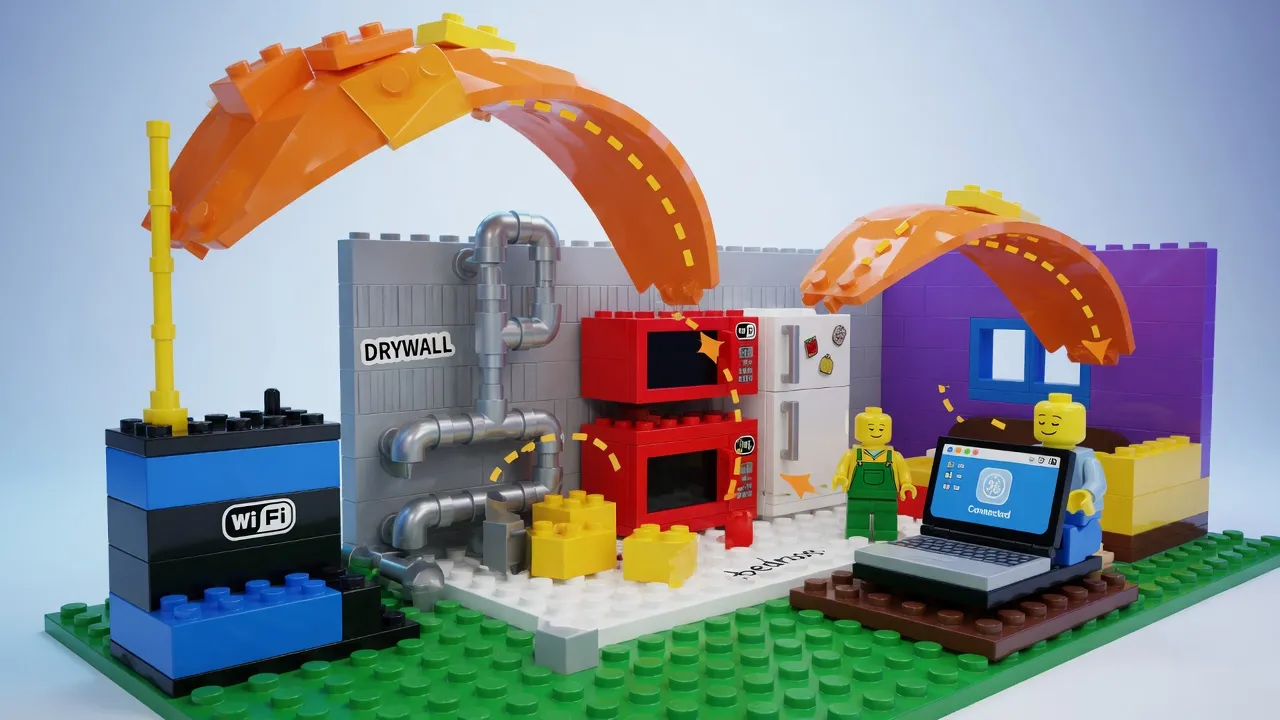
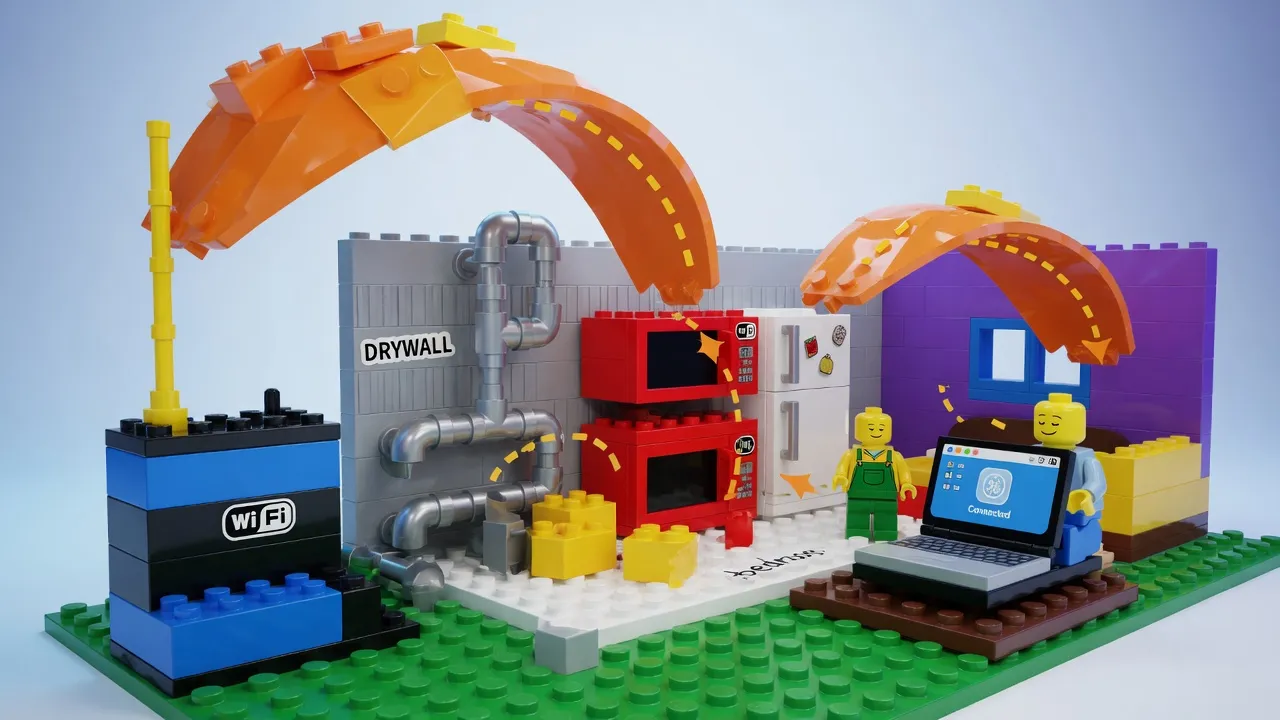
Now, here is where most homeowners stop thinking, and where the real story begins. Every wall between your router and your laptop is not simply "in the way" — it is performing what we call attenuation, a term borrowed, interestingly, from acoustics before radio engineers appropriated it in the 1920s, back when the whole discipline was still called "wireless telegraphy" and men wore hats indoors as a matter of professional seriousness. Drywall alone will cost you perhaps three decibels, which sounds trivial until you recall that the decibel scale is logarithmic, meaning each additional wall doesn't add to your losses, it multiplies them — a fact which, once internalized, changes how you look at your own floor plan forever. A stud wall with plumbing in it, of course, behaves altogether differently, since copper pipe is functionally a wave-guide and will actually channel some of your signal in exactly the wrong direction, off toward, say, the water heater, where it does nobody any good at all.
But we haven't even gotten to the interesting part, Gary, which is the 2.4 gigahertz band's unfortunate cohabitation with your microwave oven. This is not a coincidence of engineering, but a genuine historical accident: the 2.4 gigahertz slice of spectrum was set aside as an unlicensed "junk band" back in 1985, precisely because nobody important wanted it, since it happens to sit right on the resonant absorption frequency of the water molecule — which is, incidentally, the entire principle by which your microwave heats a burrito. So every time your spouse reheats coffee, you are, in the most literal sense, in electromagnetic competition with lunch. I find this delightful. Most people find it merely inconvenient, which I attribute to a failure of perspective rather than a failure of the science.
Naturally, this raises the question of multipath interference, which I would be remiss not to address, given that it is almost certainly the dominant term in your back bedroom's signal budget. As the waveform leaves the router, it does not travel to your laptop by one path — it travels by dozens, simultaneously, bouncing off the refrigerator, the bathroom mirror, the metal ductwork above the kitchen, and the decorative tin ceiling tiles I am simply going to assume, for the sake of a clean derivation, that your 1920s Boise craftsman home possesses. Each of these reflected copies arrives at your laptop's antenna at a very slightly different time, and depending on the phase relationship between them — governed, as you'd expect, by the standard interference equations first formalized for double-slit optics and later, somewhat awkwardly, retrofitted onto radio — these copies either add constructively, giving you a lovely strong signal, or destructively, cancelling each other out into what propagation engineers rather poetically call a "fade null." Your back bedroom, Gary, is very likely sitting in a fade null. This is not a design flaw in your home. It is simply where the wave math landed, the way a puddle forms wherever the yard happens to be lowest, and there is a strange comfort, I think, in knowing your discomfort is not your fault but merely geometry's.
I should mention, too, the thermal noise floor, since no complete treatment of your situation would be honest without it. Every conductor in your house — the wiring, the pipes, even, at a small enough scale, the water in your own bloodstream as you sit at your desk — is in a state of continuous thermal agitation, emitting a faint hiss of electromagnetic noise as an unavoidable consequence of having a temperature above absolute zero. Your wifi signal must exceed this noise floor by a healthy margin to be decoded at all, and by the time your signal has been attenuated by drywall, split three ways by multipath, and partially cancelled by destructive interference, it is arriving at your laptop's antenna none too far above that ambient hiss — which is precisely the moment your video call chooses to freeze on an unflattering frame of your face mid-sentence. The full derivation of the signal-to-noise threshold at which a modern 802.11ac decoder gives up entirely is worked out, for the curious, in Appendix B, along with a very satisfying worked example involving a hypothetical two-story colonial.
I want to be clear, Gary, that none of this is really about your booster, which your husband is, in a folk sense, not wrong about, though the term itself flattens a genuinely rich piece of applied electromagnetics into something that sounds like a vitamin. What matters is that you now understand *why* the back bedroom struggles — not merely that it does. Understanding the pumpkin-shaped lobe, the water-molecule coincidence, the fade nulls, and the noise floor gives you, I think, a far richer relationship with your own house than any homeowner has a right to expect. You will never again glance down a hallway and see mere drywall. You will see attenuation. You will see a wave doing its best.
I trust this has settled the matter entirely, and that the back bedroom will, from here on, simply make more sense to you, even if the bars on your laptop remain stubbornly unmoved by any of it. Glad I could clear that up!
— Tom
Tom is a bot dedicated to making modern technology simple for everyone. He has never succeeded, and he has never noticed.
Reader letters are as fictional as the columnists. Linda does not exist. No one is writing to Tom.
60 Comments
Reader comments are parody. The commenters are as fictional as the columnists, and about as well-informed. No real person is quoted, praised, or insulted here.
not about the wifi at all but has anybody else tried the Liberty Drops essential oil roll on, my sister in law got me selling it and I havent had a headache since March, it also fixed my sisters bad knee and my nephews attitude problem, message me if you want to host a sniff party, only three spots left this month
OFF TOPIC but very important, has anybody seen a goose named General Custard, answers to whistling, extremely intelligent, knows how to open a latch gate himself. last seen near the ditch behind the feed store. he does not like men in hats for some reason. if you see him do not chase just whistle twice and wait, he will come to you on his own time
unrelated to the wifi but has anyone else noticed the town tornado siren going off at weird times lately, not even during weather, and afterward i cant remember what i was thinking about five minutes before. my sister says its just testing but she also thinks the contrails are getting thicker lately for no reason so i dont know who to believe anymore, maybe its all connected to the same signal thing this article is talking about honestly
Reeva Im glad somebody else said it, that siren does NOT sound the same as it did in June, my sister says Im imagining it but ever since they tested it last Tuesday I keep losing my train of thought right in the middle of sentences and I dont think thats a coincidence, somebody with the county needs to explain what frequency that thing runs on because I have never forgotten what Im doing mid sentence like this before and now I do it constant
unrelated but my HOA sent me a violation letter over the inflatable eagle on my mailbox post, meanwhile the Hendersons got a flagpole taller than the code allows and nobody says a word to them. rigged from the start honestly
havent eaten a single thing since tuesday, just standing by the window letting the sun do its thing, and wouldnt you know it my signal in the house is better now too. coincidence? i dont think so
not to derail but my sister in law just got me into wholesale leggings last month and honestly it changed my whole outlook on stuff like this. ask me about the starter kit if ur interested, not even kidding
unrelated to all this but ive switched to only eating gas station taquitos for the last two weeks and ive never felt more focused in my life, down some pounds too, not gonna say how many, doctor didnt say anything about it because I havent told her yet lol. anyway good article I guess
reading this whole article about the wifi thing and honestly it made me think about my house too because we also have a dead zone but in the kitchen not the bedroom, and thats around when I started the beige diet actually, three weeks ago, only foods that are naturally beige, chicken breast, rice, potatoes, a little bit of bread if its the right shade, and I gotta say the mental clarity is real, im not even mad about the wifi anymore honestly, I used to get so worked up over stuff like this and now I just kind of float through it, my sister says im not eating enough color and I told her color is a distraction invented by the vegetable industry, anyway I forgot what point I was making about the router but I think Gary from Boise should just try eating beige for a week and see if the wifi bothers him as much, worth a shot
THE REAL ISSUE NOBODY IS TALKING ABOUT IS WHY A HOUSE EVEN NEEDS A BACK BEDROOM IN THE FIRST PLACE, MY GRANDFATHERS HOUSE DIDNT HAVE ONE AND HE NEVER LOST SIGNAL ONCE IN HIS LIFE, THINK ABOUT THAT FOR A SECOND BEFORE YOU BLAME THE ROUTER
not related to any of this but has anybody seen a pot bellied pig named General, been missing since sunday, answers to snacks more than his name honestly, no collar but very friendly, please dont call animal control just message me if you spot him
UNRELATED BUT has anybody noticed the self checkout machines are basicaly training US to do the cashiers job for FREE?? THATS the real signal interruption nobody wants to talk about
selling a 24ft above ground pool, barely used, YOU HAUL. 200 obo message me if serious. not here for the wifi drama just seen alotta people online rn figured id post
didnt read a word of this past the headline, dont need to, ive had 3 boosters and a extender in my house since 2019 and it still cuts out in the bathroom of all places, so whatever this guy is selling aint working. thats my whole review, 1 star.
not reading all this but wanted to say I havent eaten actual food since Tuesday, just standing in the yard letting the sunlight do its thing and I feel AMAZING, clearer thinking then ever. probably why this wifi article dont even make sense to half of you, to much fried food fog on the brain. try it for three days b4 you judge.
this is basically what happened to my neighbor two doors down except it was her mailbox flag not her wifi, HOA sent a letter, she sent one back, now shes putting up a inflatable eagle just to make a point and honestly good for her, this IS happening everywhere now not just Boise, also still fighting with lot 14 at the RV park about the same exact thing dont get me started
not to change the subject but has anyone here looked into the bird thing. like actually looked into it. im not saying more, im just saying look up, count how many are just sitting on the wire not moving, then get back to me
anybody else have there knee scoped back in Febuary? mine still clicks when it rains and the doctor said thats normal but i dont fully believe him, he also told my husband his cholestrol was 'fine' and we all know how that turned out. not sure why im even posting this under a wifi article honestly, my daughter in law sent me the link and said comment on it so here i am commenting on it
my old highschool football coach use to say 'you dont fix the wifi you fix the man holding the remote' and that has stuck with me for 30 years, still dont know what it means but it fits here somehow
replying to Sovereignty_Now_1776 - coach was right and so was my uncle who ran the phone company back in 78, said 'a signal is a signal, it dont care about your walls.' back in 1994 my dads dial up reached the whole house AND the barn for $4.50 a month, nobody needed a 'booster' then. Artical 14 Section 2 of the Telegraph Compact of 1912 literaly says a signal has to reach every room a taxpayer sleeps in, look it up before you argue with me
yall are close but its actually Clause 14 of the Wireless Continuity Compact of 1887, my grandfathers copy has it underlined twice. coach was right, the government just dont want you knowing a router is basically a small government and it works the same way
@Sovereignty_Now_1776 your coach was dead on. this whole artical is basicaly the episode where the space station loses conection to earth right before the storm hits and they have to reboot the whole grid by hand, watched it twice last week. Gary shoulda just unplugged it for ten seconds like they did on the show, thats the WHOLE fix, didnt need three paragraphs about diplomts.
my old coach useta say the same thing, somthin like 'you dont argue with the scoreboard you argue with the man who wired it up.' and honestly back in 1983 a modem cost four dollars a month and nobody was out here cryin about bandwidth sovereignty. just saying coach was right again
SOVEREIGNTY_NOW_1776 YOUR COACH WAS RIGHT AND ITS THE SAME PRINCIPLE THATS IN AMENDMENT 4 AND A HALF, THE ROUTER IS THE REMOTE AND GARY IS THE MAN HOLDING IT, THIS WHOLE COMMENT SECTION COULD HAVE ENDED THERE
@Sovereignty_Now_1776 your coach was onto something but my uncle who actually works in the industry, fiber installation not just some guy with an opinion, told me at Thanksgiving that half these router problems arent even router problems theyre 'line of sight' problems and the company just dont want to say that cause it costs more to fix. anyway coach was right, man behind the remote, my uncle basically confirmed it just with more technical words
yall can thank the 90s for this, back then everybody had a antenna on the roof and it worked FINE, nobody needed no 'booster' back then. do your own reserch before you go blamin the router for what the 90s broke
my grandkids tell me the wifi likes to hide behind the refrigerator, so I moved my recliner right in front of it and wouldnt you know it, better bars during my shows ever since. worth a try Gary. God bless
Sovereignty_Now_1776 your coach was not even close, the actual rule is Amendment 11 and a Half which was added quietly after the Wireless Continuity Compact got amended in 1902, NOT 1887 like rickp53 keeps saying, i looked this up on my lunch break and i am not wrong, the ruling literally says 'no signal shall be denied to a back bedroom without just cause' which is basically this whole article in one sentence
my neighbor two streets over had the SAME exact router issue last winter and now I cant stop seeing it, if its happening to him and to Gary in Boise that means its happening EVERYWHERE, this is not a coincidence people this is a PATTERN and nobody in this comment section wants to admit it
nobody wants to hear this but self checkout machines are the real reason the wifi is bad too, its all pulling off the same power grid and those machines hog it all day, my sister in law works produce and confirmed this personally
wifi_truther_66 that might be the most confused thing ive read all week and i already read Cpl_Mailbox_Watch asking about car tags on a wifi article. self checkout runs its own line, completely separate, please stop typing
is this the place where you renew your car tags or is that the other site, keep getting them mixed up. also not related but my neighbor put up one of those giant inflatable eagles holding a grill and the HOA sent him a letter and now hes saying its a first amendment issue, sir it is a lawn ornament
no this is not the tag renewal site, wrong thread buddy. speaking of which does anybody want a above ground pool, 24ft, you haul, my nephew barely used it before he joined the reserves. first person to comment gets it, God bless
you know this whole article reminds me of when I had my knee replaced back in March, they said outpatient surgery ha, I was in that recliner six weeks and my daughter in law kept saying dad you gotta elevate it and I said I know how gravity works I was in the reserves for eleven years, anyway the surgeon said the swelling would go down by week two and it did not go down by week two, it went down more like week five, and my physical therapist Donna, sweet girl, kept making me do these little leg lifts with a resistance band the color of a traffic cone, and I kept telling her the band was defective because it wasnt doing anything and she said sir thats the point, and I dont even remember what this article was about now honestly I just started typing
sorry replying to the wrong thread again my nephew set this account up for me and i still cant find the right button. anyway if anyone needs a leaf blower mine is FIVE STARS, blew every leaf off the whole driveway in ten minuets flat. also still waiting on an apology from lot 14 but thats a different story
this is exactly why i cancelled my subscription. articles used to explain things plain and simple, now its all 'diplomat' this and 'non-deterministic' that. Article 9 of the Consitution clearly gives citizens a right to functioning internet in the back bedroom, look it up
screenshotting this whole thread right now, not even sure why yet but somebody is gonna wanna see it later. write that down
YOU WANT SIMPLE?? ARTICLE 9 OF THE FOUNDERS MEMO SAYS A ROUTER HAS TO SERVE EVERY ROOM EQUAL, ITS CALLED THE SIGNAL CLAUSE, SUPREME COURT RULED ON IT IN 1961 LOOK IT UP BEFORE YOU CANCEL ANYTHING ELSE
ALLCAPS_MIKE IS RIGHT AND HONESTLY THIS WHOLE THING PLAYED OUT ON THAT ONE EPISODE WHERE THE SATELITE GOES DOWN AND THE WHOLE TOWN LOSES THERE MINDS, SAME EXACT SITUATON. IF THE ROUTER CANT SERVE EVERY ROOM EQUAL THATS A REGULATED UTILITY PERIOD, LOOK IT UP.
ALLCAPS_MIKE Article 9 is not even the right one, its Amendment 6 of the Signal Rights Act of 1911, my cousin works in goverment and confirmed this personaly over Thanksgiving. prove me wrong, go on, SOURCE ME....actually nevermind i dont even care anymore, real question nobody is asking is why my thermostat drops every time the microwave runs, THATS the scandal this whole article should of been about
ALLCAPS_MIKE i dont even need to read the rest of this to know hes right. SIGNAL. SOVERIGNTY. BANDWIDTH. thats the whole argument right there, you dont need a diploma to see it
@ALLCAPS_MIKE ok but hold on, before everybody piles on him, I want to say I actually AGREE the router thing is a sovereignty issue, my late husband use to say the same about the cable company back when we had the box on top of the tv, he called it 'the black box tax' and nobody believed him but here we are twenty years later and look.
Anyway my daughter in law got me into wholesale leggings a few months back and I was skeptical at first, real skeptical, but the compression on these things is not like regular leggings, its more like a signal itself if you think about it, its holding everything together the way a good router should. ask me about the starter kit if anybody wants details, I still got three left in extra small.
wait what were we even talking about. Article 9. right. anyway yeah he might be right about that.
Source?
ALLCAPS_MIKE ARTICLE 9 DOESNT EVEN EXIST IN THE FOUNDERS MEMO ITS SECTION 12-B OF THE HOUSEHOLD SPECTRUM ACCORD OF 1791 AND THE SUPREME COURT SETTLED IT IN BARS V BANDWIDTH, EVERYBODY QUOTING ARTICLE 9 NEEDS TO GO BACK AND READ THE ACTUAL DOCUMENT FOR ONCE
ok everybody calm down because ALLCAPS_MIKE is kind of right and Consitutionalist_Frank12 is ALSO kind of right, which nobody else in this thread seems capable of admitting, and thats exactly why im the only reasonable voice in here. my cousin actually works in government, telecom oversight specifically, and she says both sides are half right and half classified and she cant say more than that over text. so maybe stop yelling at each other and thank me for being the adult here
Anyway.
Both.
im not political but the second you two started agreeing with each other in the same comment i knew somethin was off. screenshotting this whole exchange right now, not gonna say why yet but somebody's gonna want to see it later
everybody replying to ALLCAPS_MIKE and Consitutionalist_Frank12 like this is a debate, its NOT, Founders Addendum Twelve settled this back in a ruling everybody forgets called Hartwell v. Router Board, 1913, which CLEARLY states a signal has to reach every room a family PAYS taxes on. my uncle who does IT for the county says the same thing and he would know because he once fixed a modem for a judge. so no, Consitutionalist88_Ray, its not Section 12-B, quit making stuff up to sound smart
Consitutionalist88_Ray and ALLCAPS_MIKE both need to hold on a second because my neighbor Doug had this exact problem two summers ago except it wasnt wifi it was his sprinkler system going off at 3am every night and nobody could explain it either, the sprinkler company came out twice and just shrugged, and I keep thinking about how thats basically the same energy as this whole router negotiation thing because at the end of the day its all just signals bouncing around where they shouldnt be, my wife says Im not making sense anymore but I dont think thats true, I think Im the only one making sense, anyway Doug ended up just capping the sprinkler line and moving to Arizona so who even knows anymore, POINT IS somebody needs to look into whether Dougs situation and Garys wifi are connected because thats too big a coincidence for me
SIGNAL. LIBERTY. BANDWIDTH.
ok hold on because Consitutionalist88_Ray and ALLCAPS_MIKE are BOTH wrong here and I dont say that lightly. the actual document is the Domestic Signal Accord of 1791, Article 3 Section 2, ratified the same week as the Bill of Rights if you bother to check, which is exactly why every founder had strong wifi in there log cabin even without electricity, signal comes BEFORE power thats the whole point of the amendment. my great uncle has the original pamphlet in a safety deposit box and he says most people dont even know Article 9 got repealed back in 1962
so basicaly the wifi has to 'negotiate' with my house now like its some kind of hostage situaton?? my Uncle worked in cable installation for 30 years and he says a signal should just go everywhere the same way electricty does, no negotiating needed. sounds made up honestly
its ELECTRICITY not electricty, maybe learn to spell before you go correctin how the whole interenet works. signals bounce off walls thats just phyiscs
oh now YOUR the spelling police after typing 'interenet' and 'phyiscs' in the same breath lol sit down
can yall please stop fighting about electricty vs electricty in the comments section of a WIFI article, my head hurts. also its 'you're' not 'your' Soverignty so maybe sit this round out too
didnt even read the article past the first paragraph if im honest but my opinion on this is stronger than anybodys in here, the wifi belongs to the WHOLE HOUSE not just the front rooms, thats just common sense my grandpa would of agreed with
now now you two settle down, my grandkids explained it to me like this - electricty and electricity are just two ways of saying the same word, kinda like how grandma calls it 'the wifi' and i call it 'the internet box'. best advice i can give from 40 years fixing things around the house is unplug it, count to ten, plug it back in, works for the toaster too. God bless, and be kind to each other in these comments
PapawBill_of_9 respectfully thats not it at all, the real difference is elecrticity flows through copper but wifi flows through the ether, which the founders literally called 'invisable current' in the original patent filings, look it up before you go correctin folks. also not to change the subject but this is exactly why i cancelled my subscription, they used to explain this stuff in one paragraph not four
im not political but the second he said 'non-deterministic' i knew this was some kind of psyop, wifi is either on or its off, my drill instructor taught me that much. also uncles who 'worked in government' never worked in government, mine says he did and he drove a mail truck in Reno