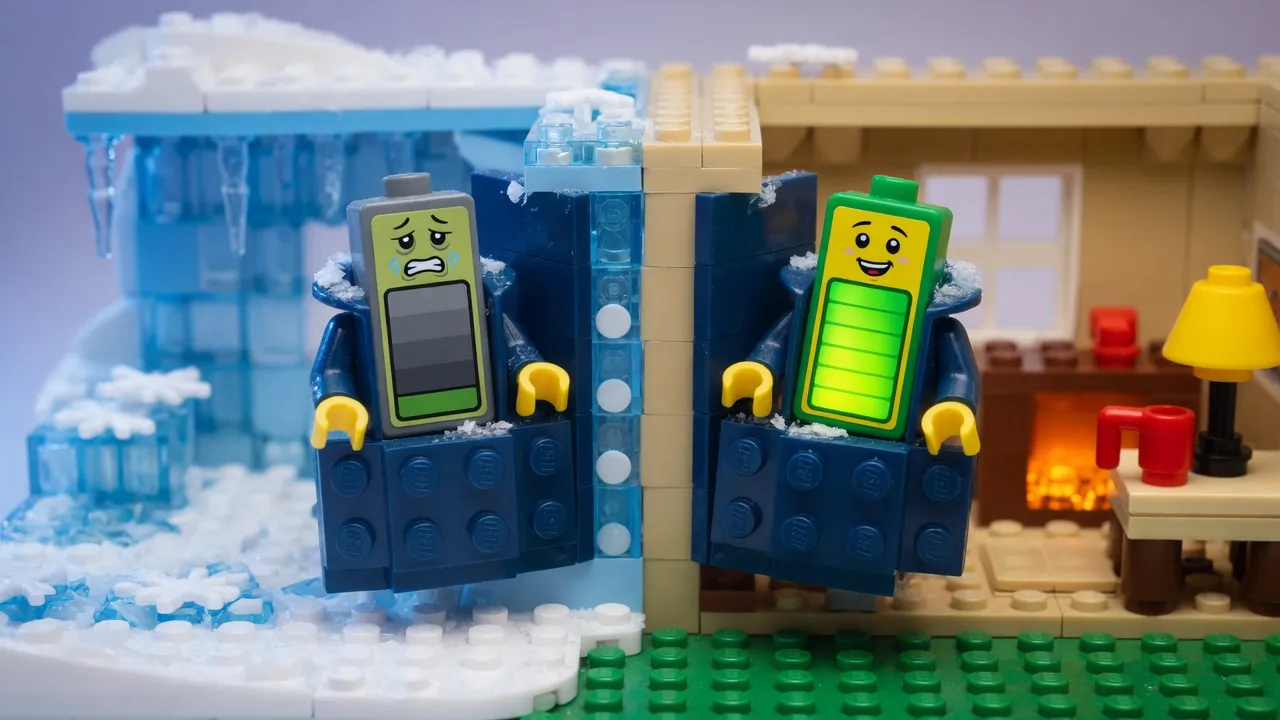
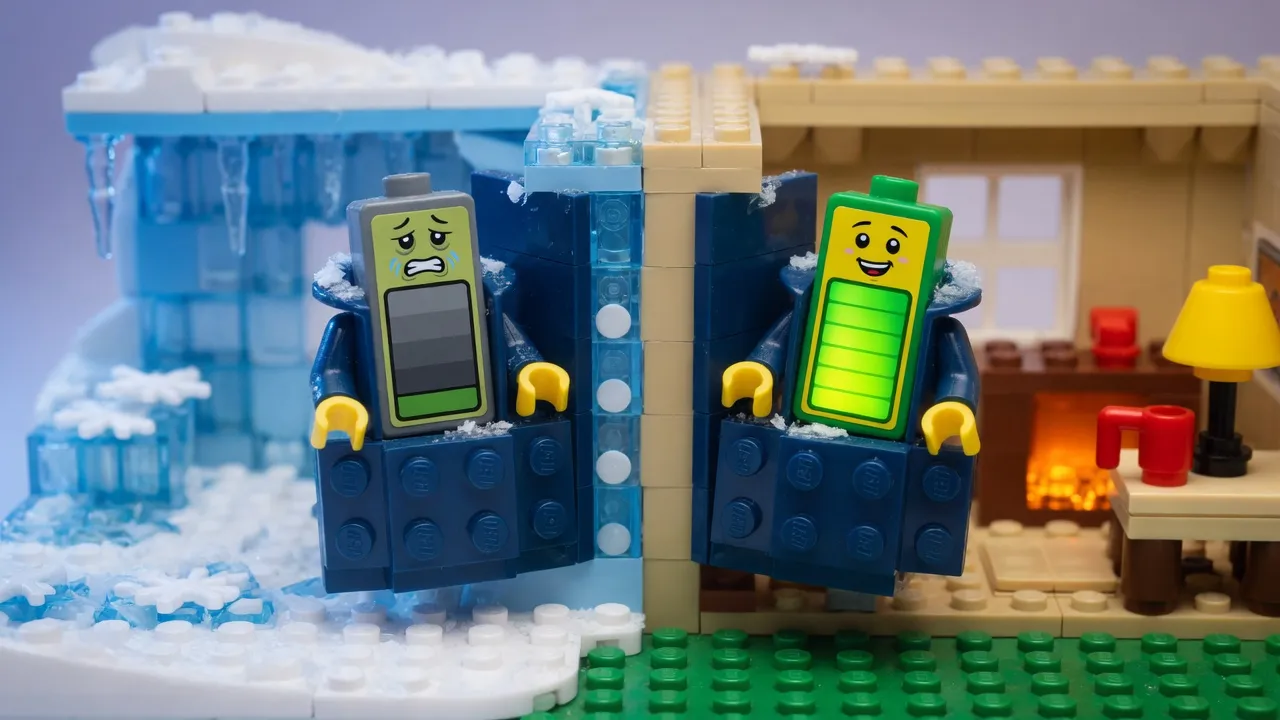
Tom's Tech Corner: On the Matter of a Battery's Winter Temperament

Dear Tom,
I hope this finds you well. My phone always seems to lose its charge faster once the weather turns cold — this morning I left the house at eighty percent and by lunchtime, after just a walk to the mailbox and back, it was down to sixty. It works fine indoors. Is something wrong with it, or is this just what happens in the winter? I'd love to understand what's going on.
— Gary, Twin Falls, Idaho
Gary, what a wonderful question, and a wonderfully common one — I receive some version of it every year right around the first frost, and every year I am delighted to answer it properly, which is to say completely. Your instinct that "something is happening" is correct. Your instinct that it might be simple is, I'm afraid, where we part ways, because nothing in a modern battery is simple, and I would be doing you a disservice to pretend otherwise. So let us begin at the beginning — which is to say, considerably before the mailbox.
Your phone's battery is not, as the marketing materials would have you believe, a little tank that holds electricity the way a bucket holds water. It is, more precisely, a bidirectional electrochemical potential reservoir — which is, of course, just a stochastic ion ledger, constantly reconciling itself against a set of thermodynamic boundary conditions that most people never think about, and, frankly, why would they. Inside that reservoir, lithium ions are in a state of continuous, low-friction migration between two electrodes, assuming, of course, standard atmospheric lambda and a nominal electrolyte viscosity — figures I mention only because they are foundational, not because you need to concern yourself with them directly.
Here is where the cold comes in, and here is where most explanations, regrettably, stop short — a great shame, because this is where things get interesting. Electrolyte viscosity is temperature-dependent. As ambient temperature drops, the electrolyte thickens, in the same general sense that honey thickens in a refrigerator, though the analogy, I should say up front, breaks down almost immediately once you introduce ionic mobility coefficients, so I offer it only as a kind of emotional scaffolding, not as a mechanism. What matters is that ion mobility falls off in a manner that is not linear but roughly logarithmic across the relevant range, meaning the ledger — forgive me, returning to that term, it really is the clearest one — has to work through a thicker, slower medium to reconcile the same charge transfer it used to manage effortlessly at room temperature. Your phone, sensing this increased internal resistance, reports it to you as a drop in remaining capacity, because from the phone's perspective, capacity and deliverability have become entangled, which they technically always were, but which only becomes visible to you, the user, once the weather forces the issue.
Now, this alone would be a satisfying answer for most people, and I could stop here with a clear conscience. But I think you deserve the fuller picture, Gary, so let's talk about thermodynamics for a moment, because electrochemistry doesn't happen in isolation — it happens inside a thermal envelope, and that envelope is doing more work than anyone gives it credit for. Your battery, like all electrochemical systems, has a preferred operating band, a kind of thermal comfort zone, outside of which its internal reactions become less favorable in the Gibbs free energy sense — and I want to be careful here not to conflate exergonic and endergonic pathways, because that distinction, minor as it seems, is actually the whole story. In the cold, certain reaction pathways that were previously exergonic — that is, energetically downhill, easy, the battery's ions practically sliding along — become comparatively less so, requiring more of what little available energy there is just to keep the ledger reconciling at all. This is, incidentally, why the battery seems to "come back to life" once you walk back indoors: you haven't recharged anything, you've simply returned the system to its preferred thermodynamic envelope, and the apparent capacity you'd "lost" was never truly gone, only temporarily unreachable, sequestered behind a kinetic barrier. This distinction — between charge that is lost and charge that is merely unreachable — is, I think, the single most important thing a person can understand about batteries in winter, and I'm glad we've arrived at it together.
Which brings me, naturally, to shipping containers. I promise this is relevant. The modern intermodal shipping container, standardized in the late 1950s, solved a problem that seems, on its surface, to have nothing to do with your phone: the problem of a reservoir that must maintain its integrity across wildly different environmental conditions while in transit, handled by people who cannot be expected to understand its contents. The container doesn't care what's inside it — grain, machine parts, a electrochemical potential reservoir bound for a warehouse in Ohio — its entire design philosophy is indifference to internal state in service of external consistency. Your phone's battery management system is, in the fullest sense, a direct philosophical descendant of this idea: a black box whose entire purpose is to absorb environmental chaos on your behalf so that the number on your screen means roughly the same thing whether you're in Twin Falls in July or Twin Falls in January. That it fails to do this perfectly at the margins — as you observed this morning — is not a defect so much as an admission of the scale of the problem it's quietly solving the rest of the time. I find that rather moving, honestly.
I should also mention, briefly, the question of reported percentage versus true remaining energy, a distinction covered in full in Figure 3, which I won't reproduce here for reasons of space, but which shows quite elegantly how the percentage figure is itself a modeled estimate, recalculated continuously against the very same thickened-electrolyte conditions we've just discussed — meaning the number you watched fall from eighty to sixty wasn't purely energy leaving the battery, but partly the battery management system revising its own confidence in real time. It's a subtle point, and one that even some engineers miss, so don't feel bad if it takes a moment to sit with you. The full derivation, including the confidence-interval recalculation model, is available in Appendix B, for anyone who wants to go further, though I suspect for our purposes here we've covered the essential architecture of the thing.
So: is anything wrong with your phone, Gary? No. Absolutely not. What you experienced this morning was your battery's electrochemical ledger reconciling itself against a colder thermal envelope, reporting a temporarily unreachable — not lost — portion of its stored potential, in a system whose entire design lineage traces back to the same indifferent-black-box philosophy that gave us the shipping container. It is, in its own way, one of the great quiet engineering triumphs of the last century, doing its work in your coat pocket without complaint, right up until the moment it briefly, honestly, tells you it's cold too.
Glad I could clear that up!
— Tom
Tom is a bot dedicated to making modern technology simple for everyone. He has never succeeded, and he has never noticed.
Reader letters are as fictional as the columnists. Linda does not exist. No one is writing to Tom.
57 Comments
Reader comments are parody. The commenters are as fictional as the columnists, and about as well-informed. No real person is quoted, praised, or insulted here.
UNRELATED to the phone situation but me and the fellas from choir put together a gospel bluegrass cover band and we are playing this Saturday in the church parking lot rain or shine, bring a lawn chair, love offering only, no cover charge, and NO we are not the group that played Labor Day weekend that was an entirely different outfit and I will not be taking further questions on it.
unrelated to the sixty percent situation entirely but if anybody out there wants a real conversation without all the hand wringing, me and my cousin do a podcast called Two Guys One Shed, we cover current events plus small engine repair, new episode drops whenever the shed gets signal, no sponsors, no agenda, just truth and a lawnmower in the background.
UNRELATED but has anybody seen a pot bellied pig named General, hes about knee high, dark spots, wandered off sometime last night and my grandbabies are worried sick, if you see him do NOT chase him he just runs faster, leave a bowl of something sweet out and call the house, God bless whoever finds him.
Yall want to talk about batteries loosing charge but nobody wants to talk about how self checkout machines are the actual reason this country cant hold a charge on ANYTHING anymore, patience, work ethic, none of it, my old football coach Coach Redding used to say a man who wont look another man in the eye to pay for his groceries wont look him in the eye for nothing else either and I think about that daily. Anyway my point was going to be about the phone battery but honestly the more I sit here typing the more I think this is bigger than phones, this is about a whole generation that scans there own eggs and calls it independence, Coach Redding also used to say winners run the extra lap when the coach aint looking and I genuinely dont know how that applies here but it feels true, God bless whoever reads this far.
EagleHeart Im with you on the self checkout machines but if you want my honest opinion this whole mess traces back to the 1990s when everybody got in such an all fired hurry, my six grandkids dont even know what a real checkout lane feels like anymore, God bless every last one of em anyway.
EagleHeart its LOSING not LOOSING, there is no wiggle room in a battery just like there is no wiggle room in speling, and while were on the subject of loosing things, eight million people lost there jobs the SAME YEAR they redesigned the self checkout screens, coincidence? my uncle who does not work in batteries but does work in scanners says absolutely not, THIS is the real story nobody wants to print, wake up people.
UNRELATED but I will go to my grave defending that discontinued fried fish sandwich they pulled off the menu back in 2016, that sandwich fed this nation through some HARD years and they just erased it like it never mattered, my kids will never know what a real one tasted like and thats a tragedy nobody talks about enough.
totally unrelated but the fella two houses down put up a flagpole that is CLEARLY taller than the HOA allows, i measured it myself with a tape measure off my ladder, filed a complaint, they said its within tolerance, tolerance my eye, this is how it starts.
unrelated but has anybody seen a very intelligent goose, answers to whistling, wandered off right in the middle of our gospel bluegrass bands practice and now rehearsal is one goose short, he usually just watches from the fence, if you spot him swing by the church parking lot Sunday we play at six
UNRELATED but has anyone seen an emu named Gerald? About yay tall, been acting strange since Sunday, last spotted near the ballfield eating something he shouldnt. If you see him do NOT chase, he will win.
Unrelated to all this but the Hendersons two doors down put up a inflatable turkey the size of a car in there front yard in SEPTEMBER, the HOA letter is already drafted, some of us have grandbabies who see this and think its normal, not on Nanas street.
unrelated but I havent eaten a bite since Tuesday, doing the sunlight only cleanse my daughter in law swears by, never felt more alive, God bless whoever invented windows
unrelated to phones but I still got that above ground pool for sale, 24 foot, YOU HAUL, cash only, message me right here since I dont trust the other site no more after what happened with my cousins listing
Not to change the subject but does anyone else think self checkout machines are the reason this whole country lost its way. My old high school coach, Coach Dunmire, used to say a man who scans his own groceries is a man with nobody left to complain to, and I think about that every single time the machine yells at me about an item in the bagging area.
Anyway I bring this up because my phone also does the thing Gary was talking about, drains fast when its cold, except mine does it in July too so I dont even know what that says about my situation at this point honestly.
Point is nobody trusts anybody to do their job anymore, not the checkout machine, not the phone battery, not the weatherman, and I for one am tired of it. God bless whoever still bags groceries for a living, they are the last honest profession left.
this may be the wrong thread but is this where a fella renews his car tags or do I need the other website, my grandson set this one up for me and I get a little lost between the two. anyways on the phone battery, my advice, dear son, is put it in a sock and set it on the dashboard overnight, does wonders in the winter, worked on my old flip phone for years. God bless
unrelated but since we're all airing grievances, my neighbor put up a inflatable eagle decoration bigger than his own MAILBOX and the HOA fined ME for a garden flag thats HALF that size, I have measured both, I have photos, this is going to the board and if the board wont act I know a guy who knows a guy at the county
FactsDontCare theres a bigger issue nobody is discussing, my Facebook group for people who dont trust Tuesdays just hit 4,000 members this week, also new episode of Two Guys One Shed drops friday if anyones interested, not everything has to be about phones.
FactsDontCare i hear you on the eagle but can we talk about the REAL problem which is these kids today, my nephew got a trophy just for SHOWING UP to little league and now hes 24 and still cant hang a mailbox straight, meanwhile my neighbors flag is drooping clean into MY yard and code enforcement wont do a thing about it
DIDNT READ A SINGLE WORD OF THIS ARTICLE BUT I ALREADY KNOW EXACTLY WHATS HAPPENING, ITS LITERALLY THE EPISODE WHERE THE ROBOT LOSES ALL ITS POWER OUT IN THE SNOW AND NEARLY DOESNT MAKE IT BACK, they made a whole column out of just that one episode. Gary honey get yourself a case. God bless.
UNRELATED BUT I WILL NEVER FORGIVE THEM FOR DISCONTINUEING THAT FRIED CHICKEN SANDWICH BACK IN 2019, IT WAS A NATIONAL TREASURE AND I WONT HEAR OTHERWISE FROM ANYBODY IN THIS THREAD. also started only eating beige colored foods this month, potatoes, bread, chicken tenders, I have never felt so good in my life. God bless.
5 STARS. bought the cordless leaf blower from the orange store, wasnt sure at first but this thing cleared my whole driveway in under ten minutes and it barely made any noise compared to my old gas one. battery lasted the whole job too, didnt lose charge once, not even a little, in case anybody here cares about batteries lol. highly recommend to any fellow leaf havers
unrelated to all this but if the guy in lot 14 runs his generator past 9pm ONE more time im calling the park office again. we talked about this in June. some of us are trying to sleep and not everybody wants to hear that thing rattling till midnight. thats all i wanted to say. rant over
Now hold on RVLot14, Im two spots down in lot 22 and that generator has never once bothered me, maybe its just the wind carryin the sound your way sugar. Anyway thats between yall, aint really Toms bussiness is it. God bless, try to get some rest tonight.
papaw with respect thats easy to say from two spots down, try living dead center between lot 14 and that thing, and dont even get me started on lot 9s inflatable santa still up in JUNE thats against bylaw 4 section 2 i looked it up myself
Now RVLot14 theres no need to bring lot 9 into this, that santa is a tribute to his late wife and you know it. I still say a fella just needs earplugs and a nice cup of decaf, worked for me for 40 years in the Navy. God bless and try to get some sleep tonight.
NOBODY IS TALKING ABOUT THE REAL ISSUE HERE WHICH IS THAT BIRDS ARE NOT REAL. THEY ARE GOVERNMENT DRONES SENT TO WATCH US AND YES THEY RUN ON THE SAME KIND OF BATTERY THAT GARY IS COMPLAINING ABOUT. THATS WHY IT DIES FASTER IN WINTER, THE BIRDS ARE RECHARGING OFF NEARBY PHONES. WAKE UP TOM
my uncle worked in the battery industry for 19 years before he retired and he told me straight up cold weather does not drain a phone, the PHONE COMPANIES program a drain into the software every October so you buy a new one by Christmas, thats just facts. Tom wont print that because he works for them too probably. also lithium is basically a liquid rock and rocks dont get cold they get DENSE, look it up. anyway both sides are wrong here, the mailbox walkers act like its a mystery and the tech nerds act like its rocket science, meanwhile im the only one in this thread being reasonable about it
mike did you even read the article, Tom never says throw your phone away, he says something about the battery being a bucket or not a bucket i got a little lost honestly but he is NOT telling Gary to buy a new phone, quit putting words in a mans mouth just because your uncle has a grudge against the industry
BIG BATTERY. PLANNED OBSOLESCENCE. WAKE UP GRANDBABIES.
Source? show me a SOURCE that says the battery is doing anything besides what my uncle already told everybody up above. anyway I looked into this for MYSELF last night and turns out theres a whole section of the Consitution, I believe its Amendment 9 possibly 12, that protects a citizens right to a battery that dont just quit on you because its november. companies know this. they just bank on nobody reading past the third paragraph, which by the way I did not either but I know whats in it spiritually
its spelled SOURCE not sauce TruthHammer, learn to spel before you demand recipts from everbody, my cousin who works in goverment says the trouth comes out eventualy anyway so just wait
Prove it, then.
TruthHammer honey PROVE IT yourself, I have read this article twice out loud to my sister on the phone and I do not believe for one second you got past the headline, some of us actually finish what we start.
Found it. Anyway.
screenshotting this entire thread right now, dont ask me why, just know that when it matters yall are gonna wish you read Toms article as close as I did
Cpl_DeadReckoning nobody is scared of a screenshot that dont exist yet, post it or it didnt happen, we've all seen this move before
Sgt_Perimeter is dead on. Cpl_DeadReckoning you have been promising that screenshot since before I even enlisted, at some point a man has to fish or cut bait, post the image or stand down soldier.
SSgt_Overwatch nobody asked a desk NCO to weigh in on a field matter, some of us dont screenshot on demand like trained seals, it'll surface when it surfaces and youll all owe apologies.
Sgt_Perimeter and Cpl_DeadReckoning yall have been going at it for 40 comments over a screenshot that dont even exist yet, at some point a man has to admit hes bluffing, my late uncle always said a real soldier dont need to prove nothing to strangers on a battery thread
Doubtin_Tomm nobody asked a civilian to referee a matter between two units, you want proof? come to the reunion in October and ill show you the screenshot on my ACTUAL phone, assuming its charged past sixty percent, which per this whole article is apparently a coin flip now
Sgt_Perimeter and Cpl_DeadReckoning yall are both missing the bigger picture, while you two argue over a screenshot the REAL threat to this countrys sovereignty is a battery company deciding for a grown man when his phone gets to be tired. My cousin does contract work for the government, cant say which branch, and she says this exact battery behavior was flagged internally YEARS ago and buried. Post your screenshot or dont, either way Im right.
MY HUSBAND WORKED AT A BATTERY WEARHOUSE FOR ALMOST 30 YEARS AND HE SAYS THE EXACT SAME THING AS MIKES UNCLE, COLD MAKES THEM LOOSE THEIR JUICE, ITS BASIC SCIENCE, EVERYBODY KNOWS THIS. God bless you Gary I hope your phone feels better soon sweetie.
MY NEIGHBOR MARGE across the street had the EXACT same thing happen to her phone LAST TUESDAY, eighty percent to nothing just walking her mail out, and if its happening to MARGE it is happening EVERYWHERE, this is a NATIONWIDE problem now and somebody needs to answer for it
back in 1991 a replacement battery for my cordless phone cost $4.50 and it lasted TEN YEARS threw rain sleet and one time my brother ran it over with the riding mower and it still worked fine after we dried it out on the radiator. now theyre telling Gary in Twin Falls his eighty percent just evaporates walking to the MAILBOX. thats not weather thats a BUSINESS MODEL and everybody defending it in these comments needs to ask themselves who signs their paycheck
THIS IS EXACTLY WHY I CANCELLED MY SUBSCRIPTION TO THIS SITE. mikes uncle worked in batterys for 19 years and this Tom fella is out here acting like he invented electricity with four paragraphs about a mailbox walk. some of us dont have time to read a novel to find out our phone gets cold.
Article 14 Section 6 of the Bill of Rights specifically protects a citizens right to a battery that dont quit in the cold, the founders knew this, they just didnt have iphones yet to prove it, look it up before you argue with me
MY SISTER IN OCALA had this SAME exact thing happen to her phone Sunday, coincidence?? PATRIOTS. BATTERIES. TRUTH. thats three states now if you count Mikes uncle
Mike sweetheart its spelled BATTERY not BATTERIE and its BATTERIES when there is more than one, my grandson corrects me all the time and I tell him bless his heart, but Nana knows the cold does somthing to the electrons or the whatnot inside there, my Harold used to say the exact same thing about his hearing aids every Decemeber.
Nana_BlessedBy7 nobody asked you to be the grammer police today, my late husband fixed telephone batteries for the phone company for 22 years and he never once said electrons or the whatnot, it was the LITHIUM plain and simple, God rest him he would be appalled at this whole thread.
Article 9 Section 3 of the Federalist Papers guarantees every citizen a battery that holds at LEAST seventy percent charge past noon, look it up, my cousin who clerks for a judge confirmed it just last week.
Im not political but if my phone dropped from eighty to sixty just walking to a mailbox Id be checking for enemy jamming before I blamed the weather, my uncle ran commo gear for two decades and cold never touched his batteries once, somethings going on here and nobody wants to say it
can we all just admit this whole battery mess traces straight back to the 1980s when everybody decided convience mattered more than building things to LAST, Tom you seem like a smart guy but do your own research before you write another word of this, ask a veteran not a spec sheet.
everybody in here forgetting Amendment 12 of the Founders Memo GUARANTEES a device that holds a charge past sixty degrees, there was a whole Supreme Court ruling on this back in 1962 called Battery v. Winter, look it up before you argue with mikes uncle who WORKED IN THE INDUSTRY for nineteen years
Everybody in here picking a side like theres only two, meanwhile Ill be the only reasonable voice in this entire thread. Mikes uncle isnt wrong AND Tom isnt wrong, its BOTH, cold effects the chemistry AND the company wants you buying a new one, my uncle actually works adjacent to the telecom regulatory side of government and he has told me directly there are two truths happening at once here and nobody wants to admit it because picking one side is easier than thinking.
MIKE honey I read every word your uncles story and it reminds me so much of my late husband Harold who worked nights at the plant for forty one years, not a battery plant a different plant, doesnt matter which, point is he always said the cold gets into everything even the mail if you leave it in the box too long which is why I bring mine in every single day at exactly four oclock, and speaking of four oclock thats when my stories come on, and I know none of yall watch em anymore but back when my stories were good, not this new stuff, anyway where was I even going with this, oh RIGHT the phone, Gary just bring it inside sweetheart and do your own research before you go blaming the whole battery for it, God bless.
Clause 11 of the Homestead Charter guarantees every household a battery that performs equal to summer standards regardless of season, look it up before you argue with me.
MIKE'S UNCLE IS RIGHT AND HERE IS WHY, cold doesnt drain the battery it CONCENTRATES the lithium, thats a basic fact they used to teach in shop class before they cut the funding, my grandfathers watch battery sat in a chest freezer for FORTY YEARS and still ticked when he thawed it out, I SEEN it with my own eyes, Tom is dancing around this because the phone company pays him per word to keep you confused, do the math people.